


We often become aware of minor changes in our eyes long before we do anything about them. A slight blur in vision, redness that lingers an extra day, a headache that always turns up after a long stretch at the computer, these are things most of us notice and then quietly ignore. It is perfectly understandable for all of us to overlook these signs, especially when there is just too much to do, and nothing feels urgent enough to stop for.
However, being able to distinguish between symptoms that can be safely watched and those that need action is something that can have a huge effect on our eye health.
Blurred or Distorted Vision
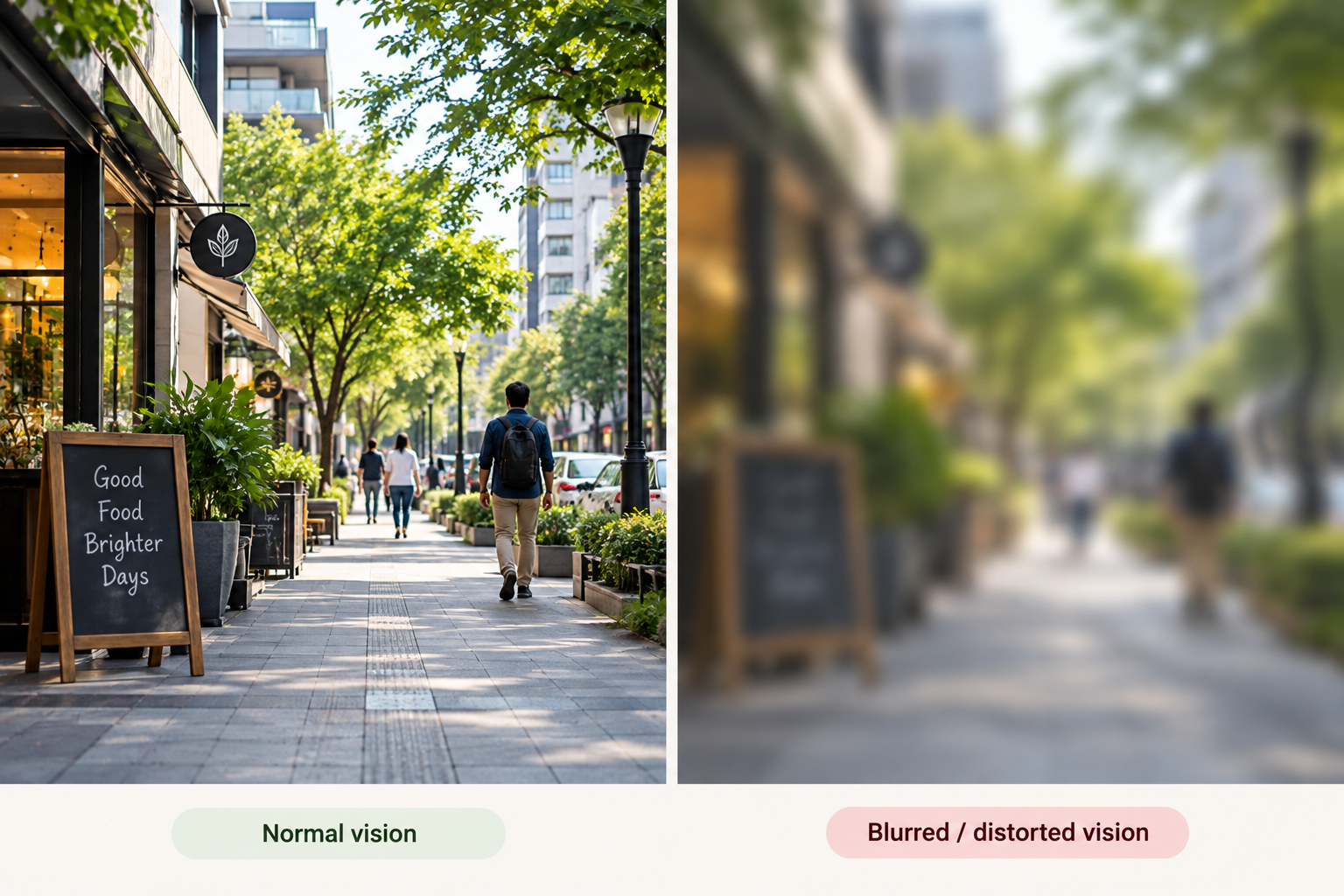
Blurred vision shows up on almost every list of common eye symptoms. But not all blurriness means the same thing, and how it arrives matters more than most people realise.
When Blurring Happens Gradually
If things have been getting fuzzier over weeks or months, this is usually a straightforward prescription change, though gradual blur can occasionally point to cataracts, glaucoma, or diabetic retinopathy too, so it's still worth getting checked rather than ignored. Your eyes are likely just telling you that your prescription has shifted, whether that's short-sightedness, long-sightedness, or astigmatism creeping in slowly. It's usually straightforward to deal with, since it's well understood and easy to fix once you know what's going on. A proper eye exam usually sorts this out within a single visit.
When Blurring Is Sudden
Sudden blurring is a different situation entirely. If your vision changes noticeably within a few hours or over the course of a day, especially in just one eye, get it looked at promptly. This kind of sudden blurred vision can point to something happening with the retina, a blood vessel, or occasionally a nerve issue, and the timing of when you get it looked at genuinely changes the outcome.
Floaters and Flashes of Light
Floaters unsettle people the moment they appear. Understandably. Watching little specks drift across your vision feels wrong, even when nothing is actually wrong.
Floaters That Are Normal
Most floaters: thread-like strands, faint cobwebs and tiny dots that show up against a bright sky or a plain wall- are just part of getting older. The gel inside your eye loosens up a bit with age and forms small clumps that cast shadows on the retina. This is common, and for most people, it never becomes anything more than a mild visual annoyance that fades into the background over time.
Floaters and Flashes That Are Not Normal
Here's where it changes. A sudden burst of new floaters, especially paired with flashes of light or a curtain-like shadow creeping in from one side, needs same-day attention. This combination can mean a retinal tear or detachment. We know that sounds alarming, and it's fair to feel a jolt reading it, but the good news is that it’s caught early, it’s very treatable. Speed is really what matters here, not the diagnosis itself.

Eye Pain and Pressure
A tired ache after a long day at your desk is normal and usually nothing. But real, persistent pain, or a sense of pressure building inside the eye, is one of the eye symptoms that tend to get brushed off longer than they should. It can stem from elevated eye pressure, an infection, or inflammation inside the eye itself, and some of these, left alone, do affect vision over time. If the pain isn't easing, or it's coming with any vision change, it would be better for you to consult an eye specialist instead of waiting it out with painkillers.
Redness That Won't Clear Up
Mild redness after a late night or heavy screen use is one of the more common eye problems out there, and it settles on its own more often than not. What's worth watching is redness that sticks around for several days, brings discharge with it, or stays limited to one eye while getting worse.
That pattern can mean infection, allergy, or occasionally something deeper in the eye, and honestly, telling those apart in a mirror is nearly impossible. That's really the whole argument for getting it looked at rather than waiting to see what it turns into.
Sensitivity to Light
Struggling with ordinary daylight or regular indoor lighting is one of those signs and symptoms of an eye problem that people quietly live with for years without mentioning it to anyone. Sometimes it's simply dry, tired eyes after too much screen time, and rest fixes it.
Other times it rides along with migraines, internal eye inflammation, or corneal irritation, usually alongside other symptoms rather than showing up alone. What else is happening at the same time tends to tell you more than the light sensitivity does by itself.

Headaches That Keep Coming Back
Here's a connection most people never make: their eyes and their headaches. The link between eye problems and headaches is real, and it's easy to miss because the pain feels like it's happening somewhere else entirely: your forehead, your temples, behind your eyebrows.
Straining to focus, whether from an outdated prescription or hours in front of a screen, can trigger exactly this kind of pain. If this sounds familiar, our piece on headache behind eyes explains the connection in more depth. And if screens eat up most of your day, it's worth reading do blue light glasses work too, the answer might surprise you.
Gradual Changes You've Been Putting Up With
The symptoms of weak eyesight that are easiest to miss aren't the ones that hit you all at once. They're the ones you adapt to without noticing. Holding your phone a bit further away. Squinting slightly more at road signs, or needing better lighting to read comfortably.
These are all common symptoms of weak eyesight in adults, and most people normalise them for months, sometimes years, before doing anything about them. If you've caught yourself thinking 'Why is my eyesight so bad lately?', take that thought seriously. It's usually enough reason on its own to book an exam. And there's no need to feel silly about waiting this long. Nearly everyone does.
Eye Symptoms That Signal Something Beyond the Eye
Not every eye symptom is really about the eye. Some are early warning signs pointing somewhere else in the body entirely. Blurred vision, dark spots, or trouble seeing at night can be among the first noticeable symptoms of diabetic eye problems, sometimes showing up before diabetes is even diagnosed.
In a similar vein, slowly losing side vision or struggling to adjust between light and dark spaces can suggest optic nerve problems linked to glaucoma, where the optic nerve itself is under strain. Neither of these should send you into a panic. But they're exactly the kind of symptoms worth getting checked promptly rather than being written off as feeling tired, as glaucoma-related vision loss doesn't reverse, so catching it early is what protects your sight.
Eye Symptoms That Need Attention Today
A small number of symptoms genuinely do not belong in the wait-and-see pile.
Knowing which types of eye problems land in this "today" category, versus the ones that can wait for a routine visit, takes away a surprising amount of the anxiety around deciding whether to actually call someone.
Conclusion
Here's the honest takeaway. Most eye problem symptoms are ordinary, manageable, and easy to treat once someone actually looks at them. A little blurriness, a few floaters, some strain after a long day- this is just what eyes do sometimes, and it rarely means anything serious.
What actually matters is spotting the exceptions: things that happen suddenly, symptoms that arrive together, anything that comes with real pain.
Some of you reading this will close the tab and book a routine check whenever it's convenient. Others might realise something here needs a call today, not next week. If that's you, book an eye consultation with MediBuddy today rather than waiting. What matters is that you listened to what your eyes were telling you instead of talking yourself out of it.
Frequently Asked Questions
1. What are the most common eye problem symptoms in adults?
Blurred vision, some redness, strain, and sensitivity are at the top of the list and are usually due to spending time on the computer, age, or an outdated prescription. Most of these are easy to treat once you get them checked, an outdated prescription, for instance, is simply corrected with new glasses or contact lenses.
2. Which eye symptoms are considered a medical emergency?
Loss of vision, sudden appearance of floaters with light flashes, a painful eye with nausea, and exposure to chemicals or an injury to the eye all qualify as true emergencies requiring immediate care. This is because the timing does make a difference.
3. Can eye problems cause frequent headaches?
Yes, much more frequently than most people think. Either poor vision or excessive use of computers and smartphones may lead to headaches around or behind the eyes and addressing the underlying issue generally reduces their frequency.
4. What eye symptoms are associated with diabetes?
Blurred vision, dark spots, and night blindness may be early indications of eye complications caused by diabetes, sometimes occurring even before the diagnosis of diabetes. This is precisely the reason why regular eye examinations are essential if there is a history of diabetes in the family.
5. When should gradual vision changes be taken seriously?
If you have trouble seeing well, have to sit close to the screen, or need more light, book an eye examination, even if none of it feels urgent. These are typically easy to remedy when caught, but are not things to live with for long.
Reviewed By:
Ophthalmologist, JNU Hospital, Jaipur
This article is for general educational purposes and does not replace personalised medical advice. If you think you may have eye problems, consult a qualified healthcare professional on MediBuddy.