
Do Blue Light Glasses Work and Actually Protect Your Eyes?

Table of Contents
Screens have become part of almost everything we do now, like for work, entertainment, scrolling, and studying right up until bedtime. Along the way, blue light glasses turned into the go-to fix that people reach for when their eyes feel tired, headaches creep in, or sleep gets harder. They promise clearer vision and calmer eyes, but do blue light glasses work the way they claim, or is this more marketing hype than proven science?
This blog breaks down what actually holds up, where these glasses help, and what protects your eyes better throughout the day. The truth is, simple habits often matter more than the glasses themselves.
What Are Blue Light Glasses and What Do They Claim to Do?
Blue light glasses have gone from being a niche accessory to something almost everyone with a screen-heavy job owns. However, what are they really built to do?
How Blue Light Filter Glasses Work
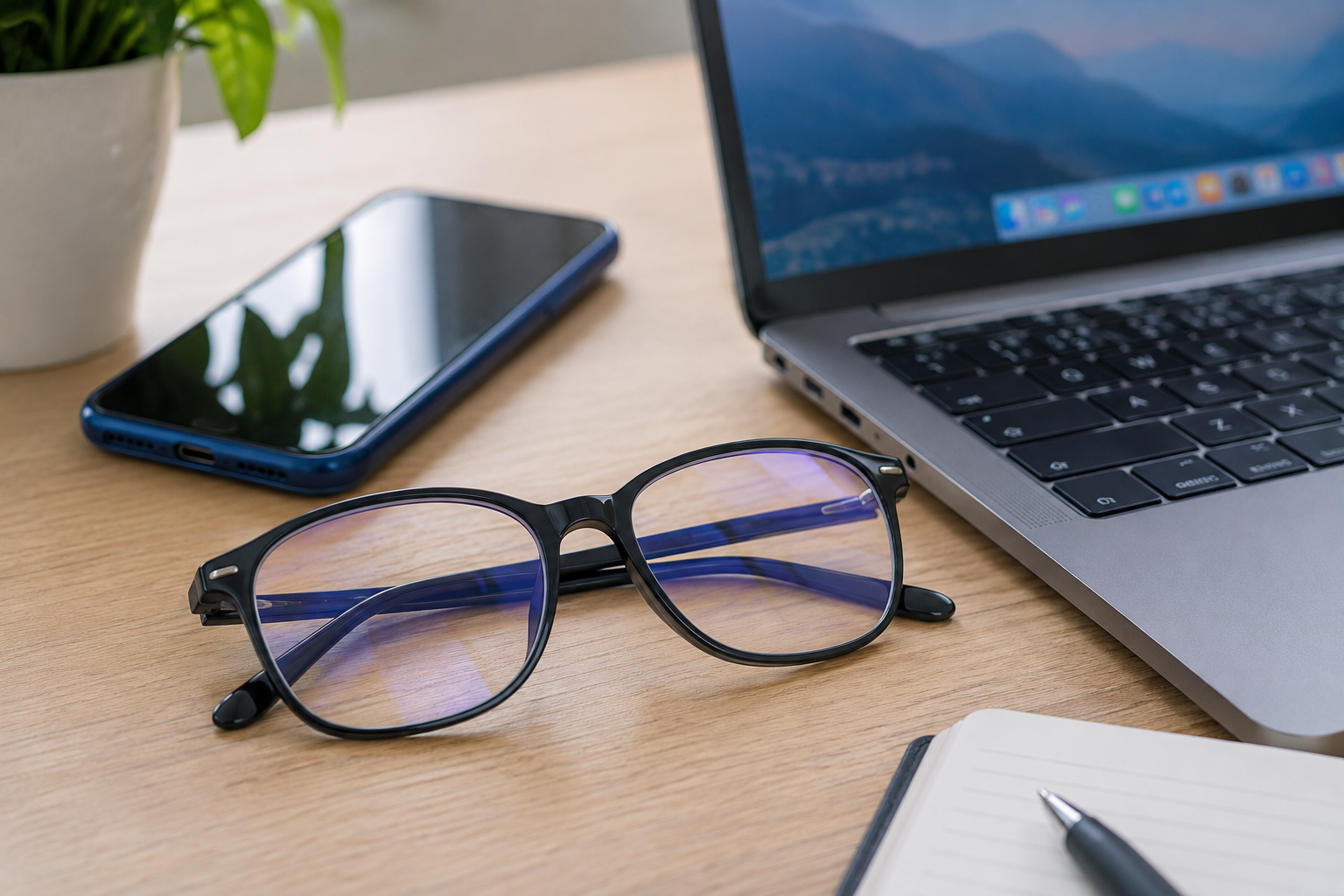
- These lenses use a special coating or tint that absorbs or reflects parts of the blue wavelength spectrum that is emitted by phones, laptops, and LED lighting.
- Some blue light blocking glasses use a yellow-tinted lens for stronger filtering, while clear lens glasses offer a lighter filter with minimal colour distortion.
- Filtering percentages vary widely, anywhere from around 10% to over 90%, which depends on lens quality and manufacturing standards.
- Lens quality also affects clarity. Cheap coatings sometimes distort colours slightly, which is worth checking before you buy a pair for daily study or office use.
The idea behind blue light filter glasses is simple: fewer blue wavelengths reach your eyes, which in theory means less strain and better rest. Whether that theory plays out in daily life depends largely on how much screen time you actually put in and what else is contributing to your discomfort.
What Blue Light Glasses Claim to Prevent
Most marketing around these glasses revolves around a few repeated promises:
- Tired eyes and digital eye strain after long screen sessions
- Headaches that are linked to prolonged screen exposure
- Disrupted sleep from blue light suppressing melatonin.
- Long-term retina damage from cumulative blue light exposure
Some of these claims hold up better than others under the weight of research. Before you assume that glasses alone will fix the continuous discomfort, it is better to consult an eye specialist who will check your eyes for other underlying causes, since posture, screen habits, and existing vision issues often play a bigger role than most people expect.
Do Blue Light Glasses Help with Eye Strain and Screen Fatigue
Blue light glasses have become a popular fix for tired, strained eyes, especially among people who spend long hours in front of screens. However, whether they genuinely help or simply make people feel better without a real physical reason why, depends on what's actually causing the discomfort in the first place. Understanding the real triggers behind eye strain makes it easier to see where these glasses can help and where they fall short.
What Causes Digital Eye Strain
Screen fatigue is rarely caused by one single factor. It generally builds up from:
- Reduced blink rate while concentrating on a screen
- Glare and poor contrast settings
- Bad posture and incorrect screen distance
- Uncorrected vision issues
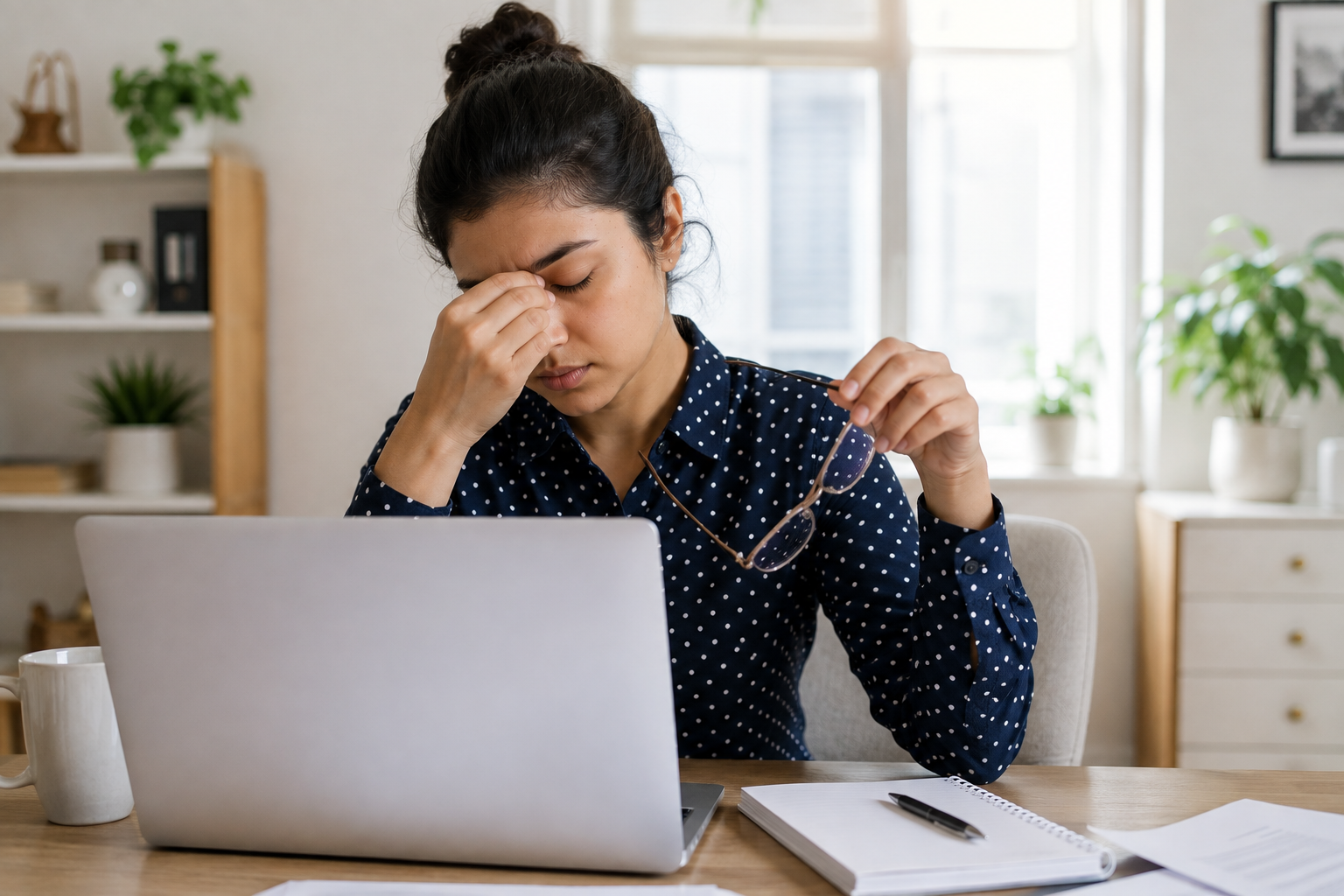
Eye strain usually shows up as dryness, blurred vision, or even a persistent headache behind eyes, especially after several non-stop hours in front of a screen. These symptoms tend to develop gradually, so many people fail to link them to screen use until the discomfort becomes hard to ignore.
Some Evidence-Based Benefits of Blue Light Filter Glasses
Not every claim is baseless. A few of the claimed benefits are actually supported:
- They reduce glare thanks to the anti-reflective coatings, which many pairs have.
- Some users report less visual fatigue, although it is largely subjective.
Table 1: Claims vs. What the Proof Really Shows
How to Reduce Blue Light Exposure Without Relying Only on Glasses
Glasses are only one piece of the puzzle. However, knowing how to reduce blue light exposure more broadly can make a huge difference.
Screen and Device Settings That Reduce Exposure
- Turn on night mode or warm colour filters in the evening.
- Lower screen brightness to match the room around you.
- Increase text size to avoid squinting and reduce strain.
Habits That Reduce Screen Fatigue More Effectively Than Glasses
- You should follow the 20-20-20 rule: Every 20 minutes, look at something 20 feet away for 20 seconds.
- Blink consciously and more often to prevent dryness.
- Step away from screens for a few minutes every hour.
Lighting Changes That Help More Than Glasses
- You should avoid working in a dark room lit only by your screen.
- Position lamps to avoid glare and reflections.
- Keep ambient lighting close to your screen’s brightness.
Table 2: Practical Steps vs. Their Impact
How to Check If Your Blue Light Glasses Are Actually Working
Wondering whether your blue light glasses actually work? A simple test tells you more than any marketing claim.
- Use a blue light flashlight app or dedicated test tool and shine it through the lens.
- Compare how much the light dims with the lens versus without it.
- Look for a spec sheet or certification list that shows the actual filtering percentage.
- Lastly, compare the tint and dimming effect against a known pair, if you have one, since counterfeit or low-quality lenses filter far less than what is advertised.
A quick at-home test will not be equal to a lab test, but it offers a reasonable sense of whether your pair is doing anything at all.
When an Eye Test Matters More Than Any Glasses
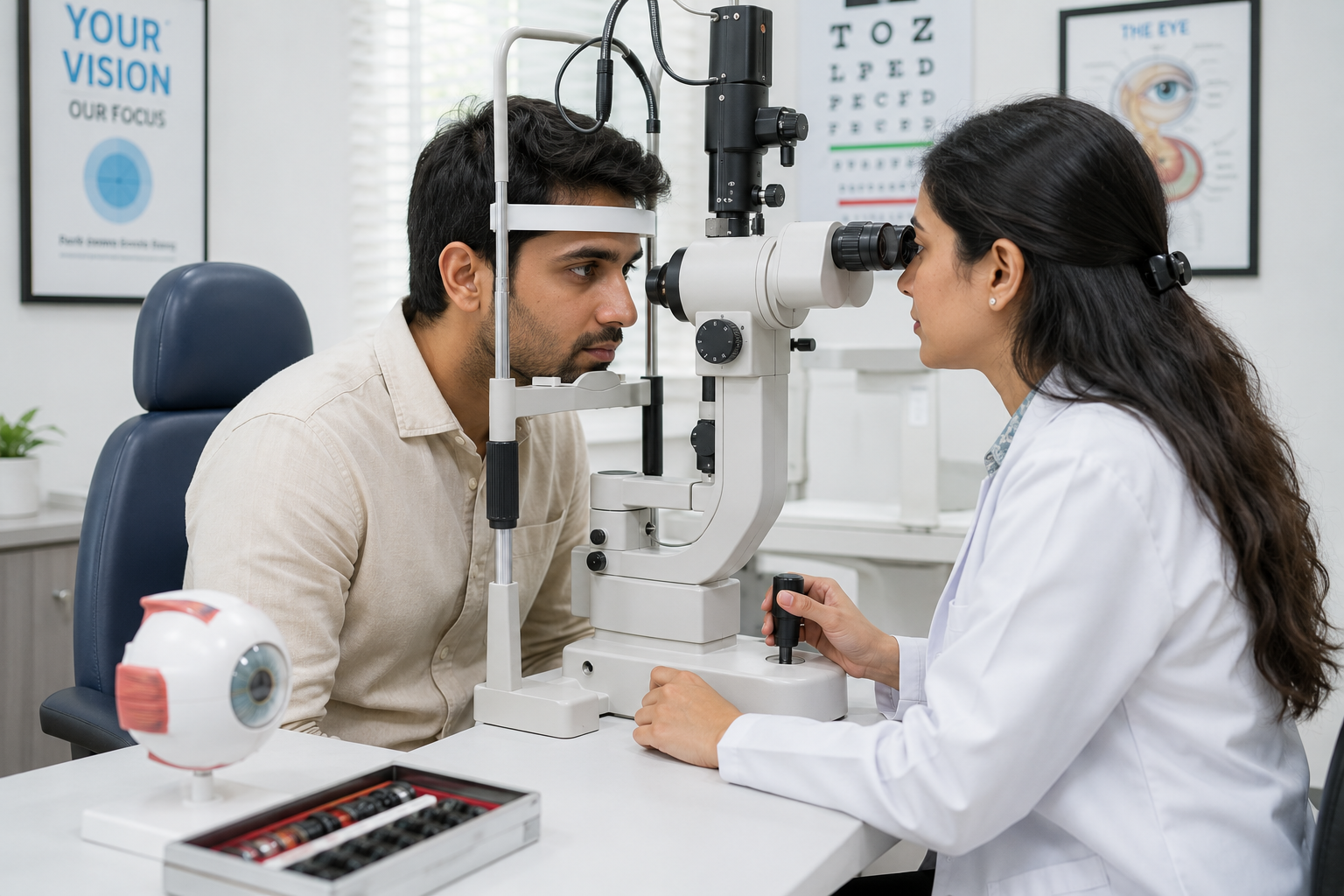
No pair of glasses can diagnose an underlying vision problem on its own. If the discomfort continues despite every adjustment, a proper eye exam is the only reliable way to know what’s really causing it. An optometrist can check for uncorrected refractive errors, dryness, or muscle fatigue that no lens tint will ever fix.
Conclusion
Blue light glasses are not useless, but they are not a complete fix either. They can improve visual comfort for some people. However, strong proof for preventing eye damage or fixing sleep problems on their own remains limited. Screen habits, lighting, and regular breaks influence eye comfort just as much, or sometimes more.
So, when people ask, ‘do blue light glasses work?’ The honest response is, sometimes, partially, and never as a stand-alone solution. You should pair them with better screen habits, proper lighting, and regular eye checks for actual outcomes. Glasses alone were never meant to carry the complete weight of eye protection in a screen-heavy life.
Frequently Asked Questions
Can I Wear Blue Light Glasses All the Time?
Yes, blue light glasses are generally safe for all-day wear with no known side effects, but they won't replace healthy screen habits, good lighting, or regular breaks for your eyes.
Are Blue Light Glasses Worth Buying If I Work on Screens All Day?
They can help some people feel more comfortable during long screen hours, but the real relief usually comes from breaks, better lighting, and correct screen brightness, not the glasses alone.
What Is the Difference Between Blue Light Glasses and Anti-Glare Glasses?
Blue light glasses filter particular blue wavelengths from screens, while anti-glare lenses reduce reflections and glare from light sources, improving clarity, so they solve different visual comfort problems entirely.
Do Children Need Blue Light Glasses?
Most children don't need them unless a doctor recommends them. Limiting screen time, encouraging breaks, and maintaining good lighting habits matter far more for young, developing eyes.
Can Blue Light Glasses Replace a Regular Eye Test?
No, blue light glasses only filter certain wavelengths; they cannot detect vision changes, eye strain causes, or underlying conditions, so a proper eye test stays vital for real answers.
Why Do My Eyes Still Hurt Even Though I Wear Blue Light Glasses?
Eye discomfort often comes from screen glare, poor posture, dryness, or infrequent blinking, not blue light alone, so glasses may not fix strain caused by these other everyday screen habits.
Reviewed By:
Ophthalmologist, JNU Hospital, Jaipur
This article is for general educational purposes and does not replace personalised medical advice. If you think you may have eye problems, consult a qualified healthcare professional on MediBuddy.


