
How to Choose Between Glasses vs Contact Lenses for Daily Use?

Table of Contents
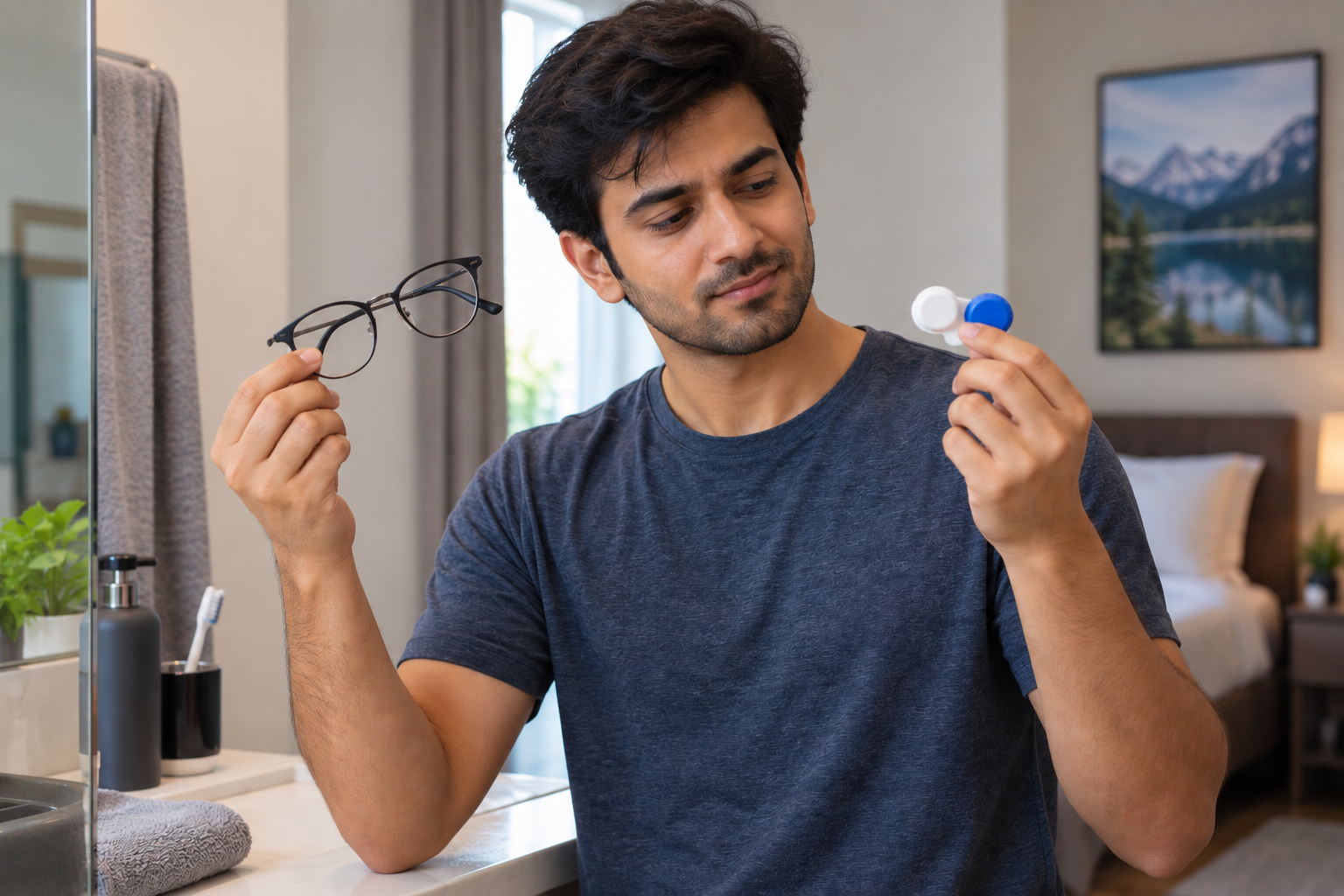
If you have been trying to choose between glasses and contact lenses, it is understandable for you to be confused. This is not a simple question because it does not have one answer.
It all depends on your comfort, daily routine, familiarity with handling lenses, your budget, and your prescription. In fact, the choice between contact lenses and glasses is something that most people think about more than once during their lives, and it is perfectly normal to be confused.
This blog explains what each of these types of vision correction has to offer and how to make a choice.
What Each Option Actually Does to Your Vision?
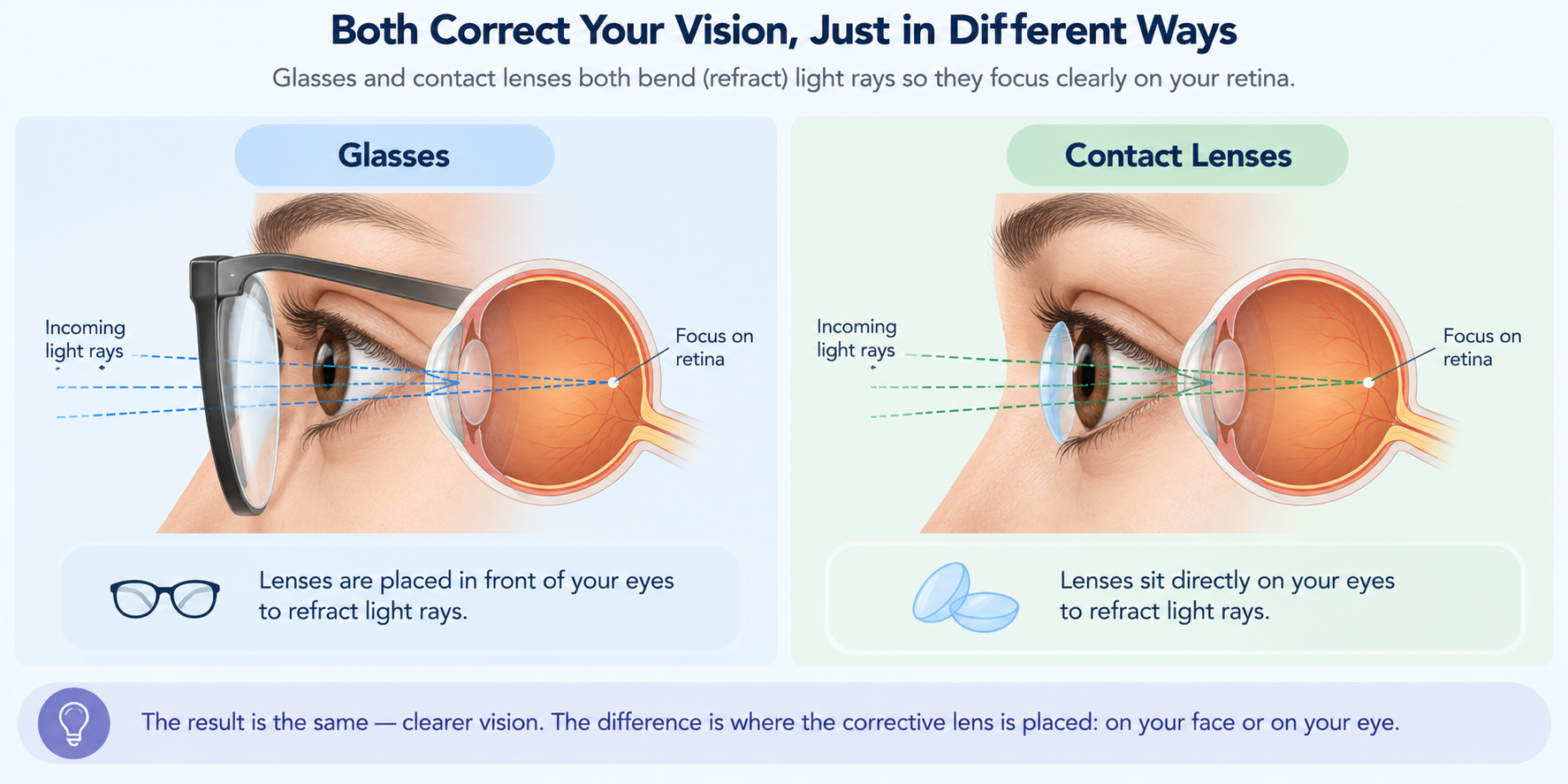
Glasses and contact lenses work in the same fundamental manner: the light rays are refracted so that they focus appropriately on the retina, and it is through this process that clear vision is achieved whether you have myopia, hyperopia or astigmatism. Neither one does the job more effectively than the other. It all comes down to the position of the corrective measure, whether it’s on your face or on your eye.
Before deciding between the two, it helps to have an accurate, up-to-date prescription. A proper eye exam will tell you not just your prescription strength, but also whether your eyes are a good fit for contact lens wear in the first place, since not everyone's eyes tolerate lenses equally well.

The Case for Contact Lenses
Lifestyle and visual freedom
One of the clearest benefits of contact lenses is how naturally they move with you through the day. There is no frame sitting on your nose, no fogging up when you step from an air-conditioned room into Mumbai's humidity, and no glasses sliding down while you are out for a run or playing a sport. Contact lenses sit directly on the eye, which means your peripheral vision stays completely unobstructed, something glasses simply cannot offer no matter how good the frame.
When contacts have a clear advantage over glasses
For people with active routines, sports, workouts, or jobs that involve a lot of movement, the advantages of contact lenses over spectacles become obvious fairly quickly. They also tend to work better for people with a strong prescription, since very high-powered glasses can distort the size of your eyes visually and create a slight fisheye effect at the edges of your vision, something contact lenses avoid entirely. If appearance matters to you day to day, that is also a completely valid reason to lean toward contact lenses, and there is no need to feel vain for wanting that.

The Case for Glasses
Simplicity, safety and daily reliability
Glasses ask far less of you on a daily basis, and that simplicity is a real advantage, not just a fallback option. You put them on, you take them off, and there is no direct contact with your eye involved, which removes an entire category of risk around hygiene and infection.
For many people juggling busy mornings, glasses simply ask less of your day, which is exactly why they remain the more practical everyday choice.
When glasses are the better choice
If you live or work in a dust-polluted environment, which is common in many Indian cities, glasses tend to cause fewer irritation, since contact lenses can trap dust particles against the eye.
The choice of glasses is also preferable when you suffer from chronically dry eyes, find it hard to keep up with a daily lens-care routine or prefer to avoid touching your eyes each day.
None of these factors makes you high-maintenance or outdated. These factors only prove that glasses suit your lifestyle.
Glasses vs Contact Lenses: A Full Comparison
So, are contact lenses better than glasses? Honestly, it depends entirely on what you value day to day. Here is a side-by-side look to make the comparison easier.
Is It Safe to Wear Contact Lenses Every Day?
In general, yes, it is safe to wear contact lenses, provided that certain simple habits are followed every day. That said, safety depends on avoiding a few common mistakes. Wearing lenses for too long, sleeping in daily-wear lenses, or using lenses beyond their expiry date reduces the oxygen reaching the cornea and risking infections.
Contact lenses themselves are not inherently the problem, and this is an important distinction. The lenses themselves are not the problem. It is inconsistent hygiene, expired lenses, or ignoring discomfort that leads to complications, not contact lens wear as a category. Washing your hands before handling lenses, replacing them on schedule, and never sleeping in lenses not designed for overnight wear go a long way in keeping wear genuinely safe. If you ever notice persistent redness, discomfort, or blurred vision, it is worth pausing lens use and choosing to consult an eye specialist rather than waiting to see if it resolves on it’s own.
Who Should Stick to Glasses?
There really are some individuals who are more suited to wearing glasses, and figuring that out from the start avoids all kinds of hassles. These include individuals who suffer from chronic dry eye syndrome, those who are susceptible to repeated infection or allergy in their eyes, children who aren't yet at the point where they can take care of lenses themselves, and those new to contact lenses who are not yet comfortable handling the daily maintenance that comes with contact lens wear. But nothing is set in stone.
Often enough, people who start wearing glasses will go on to wear contact lenses eventually.
Can You Use Both Glasses and Contact Lenses?
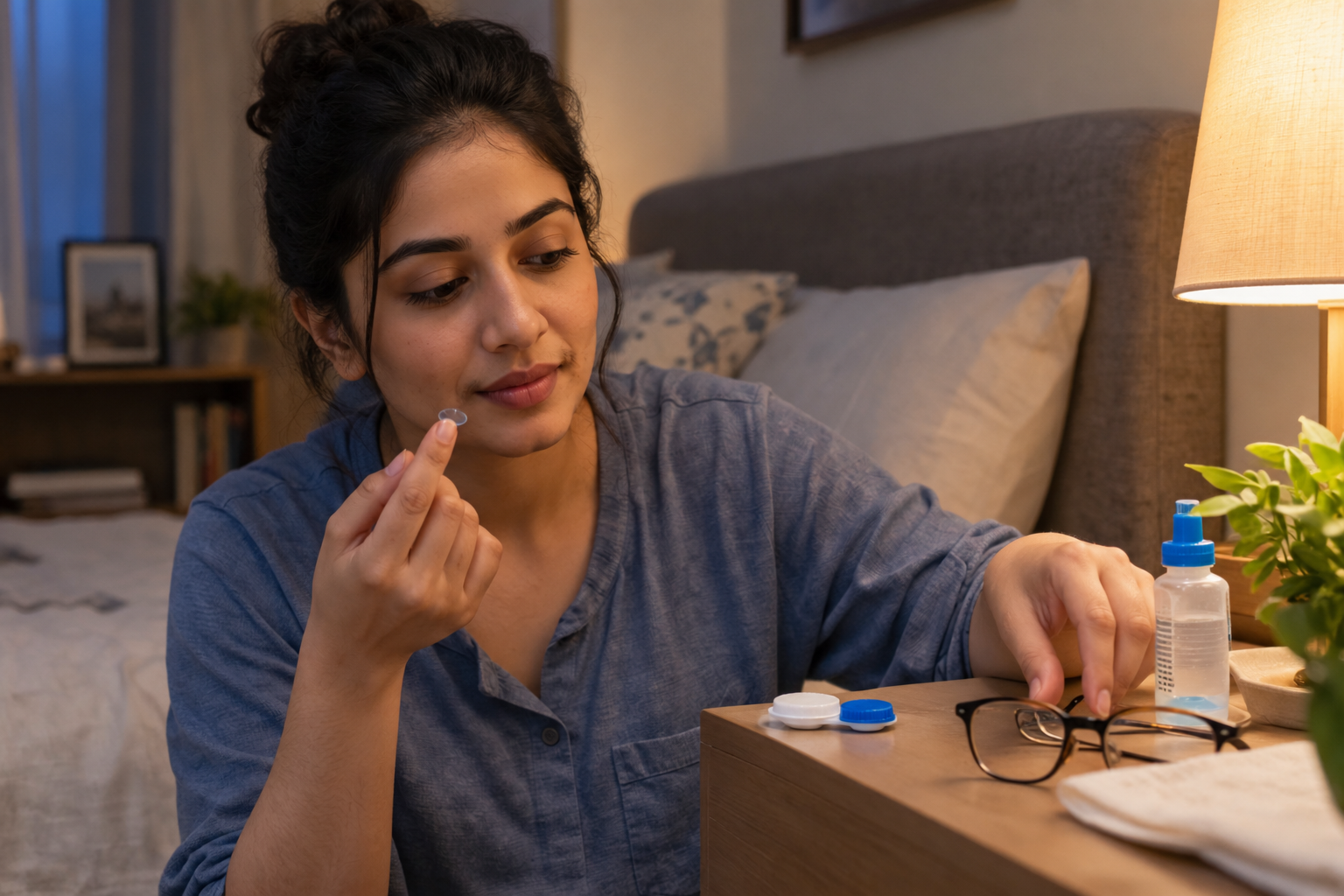
You genuinely can, and a lot of people find this the most liveable setup of all. Wear contact lenses for work, socialising, or activity. Switch to glasses in the evening to give your eyes a real break. That alone cuts down your total daily lens-wearing time, and your eyes will thank you for it over the long run.
Some people also keep a separate pair of screen-time glasses for long work stretches. Spending hours on a laptop or phone most days? If you're considering this, it's worth reading: do blue light glasses work before assuming that combination is worth adding, since sometimes simpler screen habits do just as much good.
Conclusion
There are really no right or wrong options when it comes to wearing contact lenses or glasses, and neither is better than the other. While some individuals prefer to benefit from the independence that contact lenses bring them in their everyday life, others feel satisfied with the simplicity that comes with using spectacles.
Both alternatives have their advantages and can definitely help you to see well and feel comfortable. However, what is really important is making the choice based on your needs and lifestyle rather than on the convenience of the solution. If you have any questions about which method to choose, book a consultation with an eye specialist.
FAQs
1. Do contact lenses damage your eyes over time?
Not when they are properly worn. Regular maintenance, timely replacement, and never sleeping in lenses that aren't designed for overnight wear will greatly reduce the risks, and complications usually occur due to the way the lenses are handled and not because of the lenses themselves.
2. What are the main disadvantages of contact lenses?
The most frequent disadvantages include the necessity of regular cleansing and hygiene practices, an increased risk of eye infection if hygiene routines aren't followed closely, and an increased expense when compared to wearing glasses because of the need to replace the lenses on a regular basis. Some individuals also experience discomfort at the end of a long day.
3. What is the cost difference between glasses and contact lenses over time?
Glasses are relatively cheaper in the long run because you will only need one pair for several years with just periodic changes in prescriptions. Contact lenses have a continuous cost that is incurred each time new lenses and solutions are purchased.
4. Can wearing the wrong glasses prescription cause more harm than contact lenses?
Yes, an outdated or wrong prescription of glasses can really lead to more trouble compared to properly fitted contact lenses, including headaches behind the eyes, eye strain, and blurred vision from constant overcompensation. Checking the prescription from time to time is as important as the choice between glasses and contact lenses themselves.
Reviewed By:
Ophthalmologist, JNU Hospital, Jaipur
This article is for general educational purposes and does not replace personalised medical advice. If you think you may have eye problems, consult a qualified healthcare professional on MediBuddy.


