

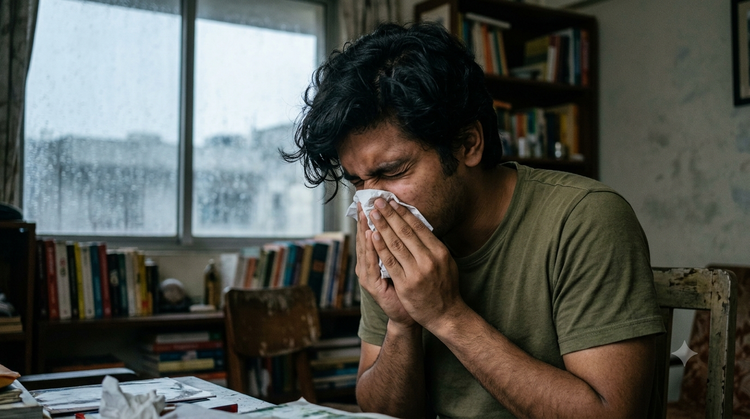
The first rains always feel special. The smell of wet mud, the cooler breeze, and the break from summer heat can make the monsoon feel almost magical. However, for many people across India, the monsoon brings something far less welcome: constant sneezing, a stuffy nose, itchy eyes, and a scratchy throat that just won’t go away.
Sounds familiar? Well, you are not alone.
Every year, millions of Indians find themselves pondering: is this a normal cold, or is it monsoon allergies acting up again? They feel like two sides of the same coin, which makes it easy to mix them up. However, understanding the distinction between them is paramount, because the way you handle them is very different. So, let us break it down in simple steps.
Why the Monsoon Season Triggers Allergies In India?
India’s monsoon is not just about rain. It brings a complete change in the environment, such as homes staying damp for weeks, humidity shoots up, ventilation becomes poor, and allergens that were dormant during summer time suddenly come alive.
Monsoon allergies are largely driven by this rise in humidity. When the air holds more moisture, it creates the perfect atmosphere for fungus, mould, and dust mites to grow. Furthermore, many Indian homes have limited cross-ventilation, stored items like old newspapers, mattresses, and winter clothes, as well as older construction. Together, these factors create the perfect environment for rainy season health problems to worsen.
In cities like Chennai, Mumbai, and Kolkata, where humidity regularly crosses 85-90% during the monsoons, this situation becomes much more pronounced.1 Shared office spaces, crowded transport, and pollution mixing with damp air also make breathing uncomfortable for those who are prone to seasonal allergies.
The Role of Humidity Mould, and Dust Mites
Here is something many people do not realise: a lot of monsoon allergy symptoms are not caused by pollen or outdoor air alone. They are triggered by what is quietly growing inside your home.
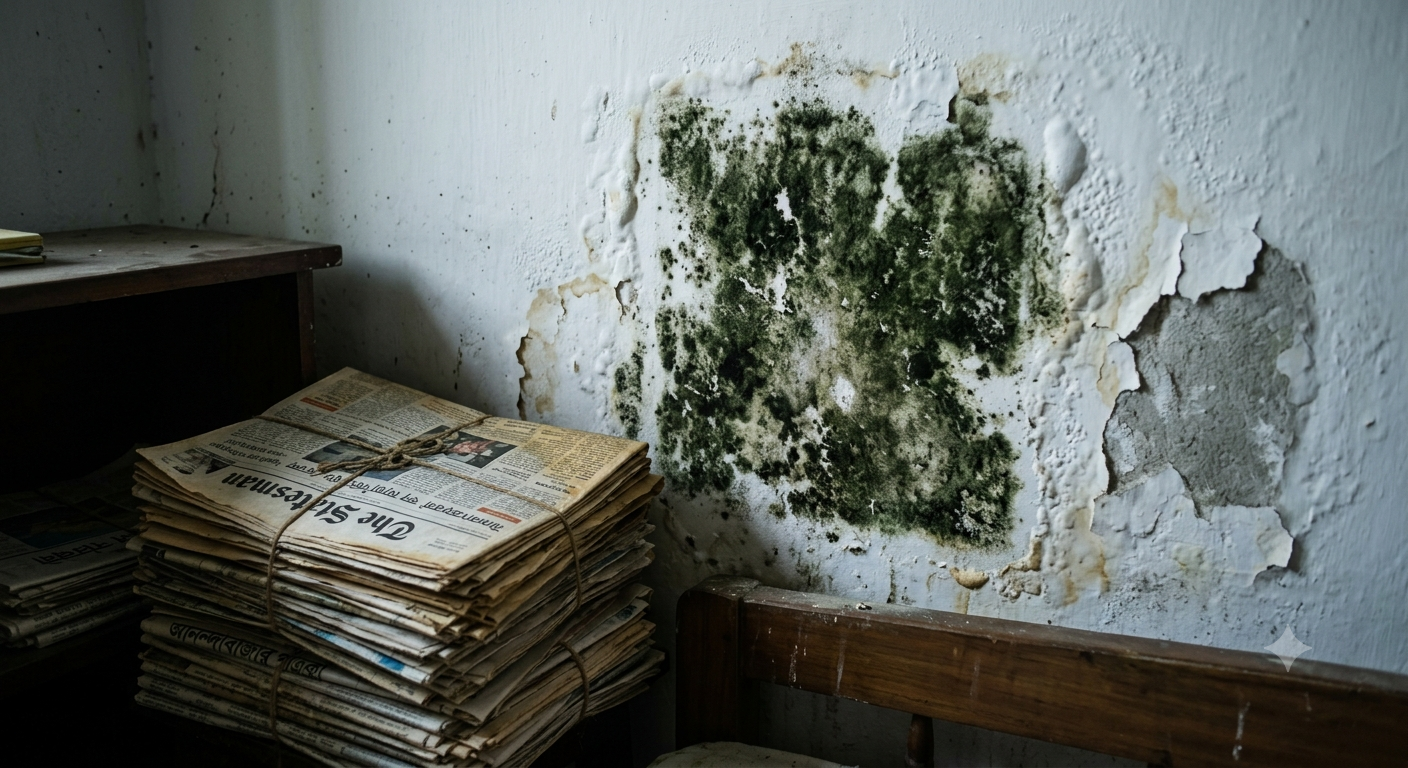
Mould: It is a kind of fungus that spreads through tiny spores which are invisible to the naked eye. During monsoon, it grows rapidly on damp walls, old books and newspapers, bathroom grout, wet clothes left inside, and even inside your coolers, if it hasn’t been cleaned.
When you breathe in these spores, your immune system reacts with symptoms such as sneezing, congestion, and in some cases, it also causes skin reactions. Mould allergy treatment usually involves reducing exposure first, before any medicines can actually work.
Dust Mites: They are microscopic creatures that live inside your mattresses, carpets, pillows, and soft furnishings. They love a warm, and humid atmosphere, exactly what Indian homes become during monsoon season. A dust mite allergy can also cause year-round symptoms. However, it almost always increases significantly during the rainy season when humidity keeps their population thriving.
Think about that stack of stored blankets you pull out when it’s cooler, or the carpet in your living room that has not been sun-dried for months. These are some common hiding spots for allergens that silently trigger your symptoms every day.
Monsoon Allergy vs Cold: The Key Difference at a Glance
This is the question most people struggle with. Both allergies and a cold can cause a runny nose, general discomfort, and sneezing. However, there are some clear differences that are worth looking out for.
A cold is caused by a virus. It generally takes a day or two to develop after exposure, and it comes with body aches and sometimes fever, and follows a predictable course. How long does a cold last? It typically lasts 7 to 10 days, after which your body fights it off and you start feeling better.
Monsoon allergies, on the other hand, are triggered by allergens like mould, dust mites, pollen, and your immune system’s reaction to them. Allergy symptoms tend to appear almost immediately after exposure to a trigger, do not cause body pain or fever, and can last for weeks or even months if the trigger is not removed.
Comparison Table: Monsoon Allergy vs. Common Cold
Common Monsoon Allergy Symptoms In Adults
Monsoon allergy symptoms can range from mildly annoying to really disruptive. In India’s packed local trains, crowded offices, and homes where windows remain shut because of the rain, exposure to allergens becomes your constant companion.
Respiratory Symptoms
The most common complaints are respiratory. They include:
- Sneezing - Often repeated, sometimes in long bursts, especially after entering a dusty room or waking up.
- Post-Nasal Drip - Mucus trickling down the back of your throat which causes a continuous mild cough or throat clearing.
- Runny or Blocked Nose - A constant drip or that frustrating stuffed-up feeling that makes breathing through your nose very difficult.
- Dry Cough or Mild Wheeze - Specifically with people who already have asthma or sensitive airways.
- Breathing Difficulty - For those who have asthma, seasonal allergy triggers during the monsoon can also cause flare-ups that require quick attention.
These issues are often overlooked as “just the weather.” But if they keep returning during the monsoons, allergies are likely the root and you must consult a doctor immediately.

Eye and Skin Symptoms
Itchy eyes during monsoon are one of the clearest signs of an allergic reaction rather than a cold. Itchy eyes allergies usually present as:
- Watery discharge that keeps returning.
- Redness and continuous itching in both eyes.
- Sensitivity to light in some cases.
- A gritty or burning sensation.
Skin symptoms are equally common but they are often overlooked. Monsoon skin allergy can appear as rashes, redness, or itching, particularly in body folds, feet, or areas that remain damp. Additionally, walking through puddles in wet shoes, wearing synthetic or tight clothes that trap sweat, and prolonged exposure to damp fabric are some common triggers. Skin diseases during rainy season also include fungal infections that thrive in warm and moist conditions and can spread between members of the family via shared towels or wet flooring.
How Long Do Monsoon Allergy Symptoms Last?
The key difference between the two is how long they last: a common cold is a temporary infection, while monsoon allergies can linger for the entire season. A cold comes with an end date, your body devises an immune response, fights the virus, and you recover. Most people get better within 7-10 days and may experience some weakness after fever.
On the other hand, allergies do not follow a fixed timeline. As long as you are exposed to the trigger, whether it’s mould on your bathroom walls or a dusty mattress, your symptoms will continue. For most Indians, this translates into symptoms that stretch across the complete monsoon season.
If your sneezing and congestion have lasted more than two weeks without any improvement, it is best to see a doctor rather than waiting it out.

Managing Monsoon Allergy Symptoms at Home
The great news is that with the help of some health tips for monsoon season, these triggers can be reduced at home itself.
Reducing Allergen Exposure Indoors
These simple steps will make an actual difference, especially in Indian homes where dust and dampness are common concerns:
- Keeping Rooms Dry and Ventilated: You must open windows when it’s not raining to let fresh air circulation. Use exhaust fans in bathrooms and kitchens.
- Sun-Dry Mattresses, Blankets, and Pillows: Whenever it's not raining, sun-dry your mattress, blankets, and pillows, as sunlight naturally reduces mould and dust mites.
- Clean Ceiling Fans, Air Conditioner Filters, and Coolers: You must clean your coolers, fans etc., thoroughly, coolers specially, as it can develop mould if the water tray is not cleaned regularly.
- Avoid Drying Clothes Inside the Bedroom: As wet clothes raise indoor humidity and encourage mould growth, so you must avoid drying your clothes in the bedroom.
- Wash Bedsheets Regularly In Hot Water: You must wash your bedsheets at least once a week during monsoon to eliminate dust mite load.
- Clear Out Damp Corners, Old Newspapers, and Stored Items: As mould builds over time, so you must clear out damp corners, eliminate old newspapers, and clean stored items.
These habits directly support the prevention of rainy season diseases and reflect some of the most effective health tips for the season.
Over-the-Counter Relief Options
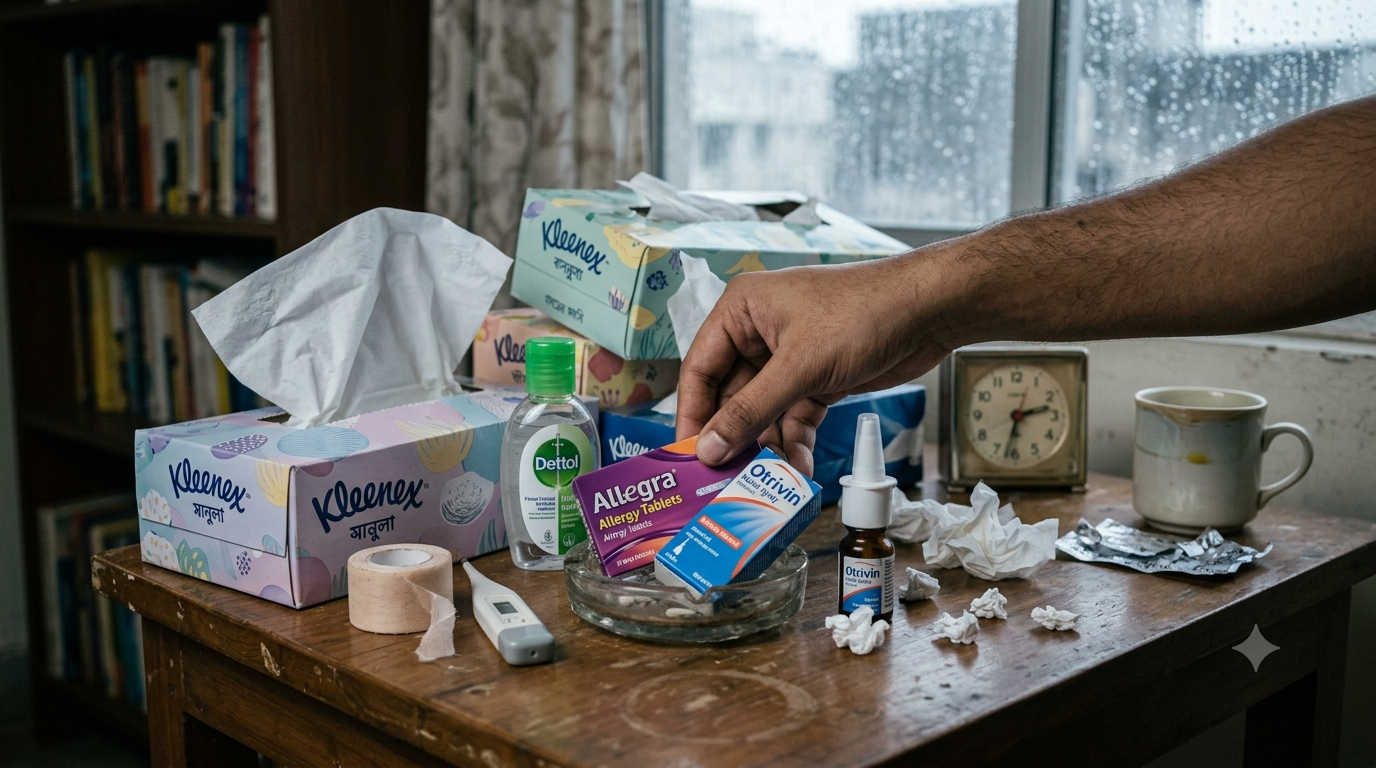
For mild symptoms, some general OTC options available in India are as follows:
- Saline Nasal Sprays: You must gently rinse the nasal passage and eliminate congestion without any medications.
- Lubricating Eye Drops: They can soothe dry or irritated eyes, but you must use them only after checking with your doctor.
- Antihistamine Tablets: They help reduce sneezing, runny nose, and itching.
- Moisturising or Antifungal Creams: Lastly, use creams to treat your skin symptoms based on what your doctor recommends.
When Home Management Is Not Enough: Signs You Should See a Doctor
You must see a doctor if any of these apply to you:
- Symptoms last for more than two weeks with no sign of improvement.
- You experience breathing difficulty, chest tightness, or wheezing especially if you have asthma.
- You have a fever for 3 days or longer, which may point to an infection rather than an allergy.
- Your symptoms are disrupting your daily sleep or make it hard to concentrate at work.
- Eye symptoms include severe redness, pain, swelling, or any change in vision.
- Skin shows signs of spreading infection such as pus, warmth, increased redness, or fever.
- You feel unusual weakness after fever or illness that does not seem to go away.
- The effects of monsoons on health are very real, so it is vital to consult a doctor quickly rather than waiting to see if things go back to normal on their own.
Conclusion
Monsoon in India is beautiful, but it does bring with it some health challenges, and monsoon allergies are among the most common ones that people quietly put up with. The key is knowing what you're dealing with. A cold will pass within a week, but allergies, on the other hand, will keep coming back as long as the trigger is present.
You must pay attention to how your symptoms behave, check your home for damp and dusty corners, and do not ignore signs that require medical attention. So, with the right awareness and a little care, the rainy season need not mean months of sneezing and discomfort. Help is available, and the sooner you address the cause, the easier it becomes to enjoy the rains without dreading them.
Frequently Asked Questions
Can Monsoon Allergies Cause Fever?
Allergies rarely cause fever. If you have a continuous or high fever alongside allergy symptoms, it likely is an infection and requires a doctor’s evaluation.
What Is the Treatment for Monsoon Allergies?
Treatment depends on your triggers and severity. Reducing allergen exposure, using antihistamines and nasal sprays, and seeking doctor-guided care for conditions like dust mites or mould allergy generally help.
Are Monsoon Allergies Contagious?
No, allergies are not contagious. Unlike a cold, which spreads via viral contact, allergies are simply your immune system reacting to atmospheric triggers such as mould or dust.
Can We Treat Allergies at Home?
Mild symptoms can be managed by keeping your home dry, cleaning regularly, and using basic OTC relief. You can also consult a doctor if symptoms continue or worsen significantly.
Reviewed By:
Dr. Gowri Kulkarni
Head of Medical Operations, MediBuddy
This article is for general educational purposes and does not replace personalised medical advice. If you think you may have seasonal allergies, consult a qualified healthcare professional on MediBuddy.
Sources:
1. Khan, P. I., Ratnam, D. V., Prasad, P., Basha, G., Jiang, J. H., Shaik, R., Ratnam, M. V., & Kishore, P. (2022). Observed Climatology and Trend in Relative Humidity, CAPE, and CIN over India. Atmosphere, 13(2), 361. https://doi.org/10.3390/atmos13020361
2. Mehta, S. K., Ananthavel, A., Reddy, T. V. R., Ali, S., Mehta, S. B., Kakkanattu, S. P., Purushotham, P., & Betsy, K. B. (2022). Indirect Response of the Temperature, Humidity, and Rainfall on the Spread of COVID-19 over the Indian Monsoon Region. Pure and Applied Geophysics, 180, 383–404. https://doi.org/10.1007/s00024-022-03205-7