


A fever that won’t break for days on end can be unsettling. You take paracetamol, rest, drink plenty of fluids, yet the thermometer barely moves. This is a very common worry, and you are not alone in wondering what it means when your body keeps running hot despite everything you try. So, if you are running a fever for 3 days and it refuses to break, here is what the pattern usually means, which symptoms need your immediate attention, how you can safely manage at home, and when it’s time to really consult a doctor instead of waiting it out.
What a Fever for 3 Days Could Mean
Most fevers are your body’s way of fighting infection, and a short spike is no reason to worry. However, when a fever for 3 days hangs around without going down, the pattern is worth noticing. This is also the season where it is easy to mix up a real fever with monsoon allergies, which can cause a similar stuffy, feverish feeling without any actual infection.
Constant or Continuous Fever for 3 Days
Doctors usually ask how your temperature has been behaving, because the shape of the curve narrows the likely reason quicker than the number alone. A constant fever for 3 days means your temperature stays high almost all day without dropping to normal. This pattern is often linked to typhoid, urinary infections, or certain other bacterial illnesses.
- Temperature sits between 100°F (38°C) and 102°F (39°C) most of the day.
- Paracetamol brings it down very briefly, then it climbs back up.
- Little to no fever-free window, even at night.
If your temperature genuinely does not dip for three complete days, you should mention that steadiness to a doctor, since it can point to bacterial causes which might need further evaluation.
Fever On and Off for 3 Days
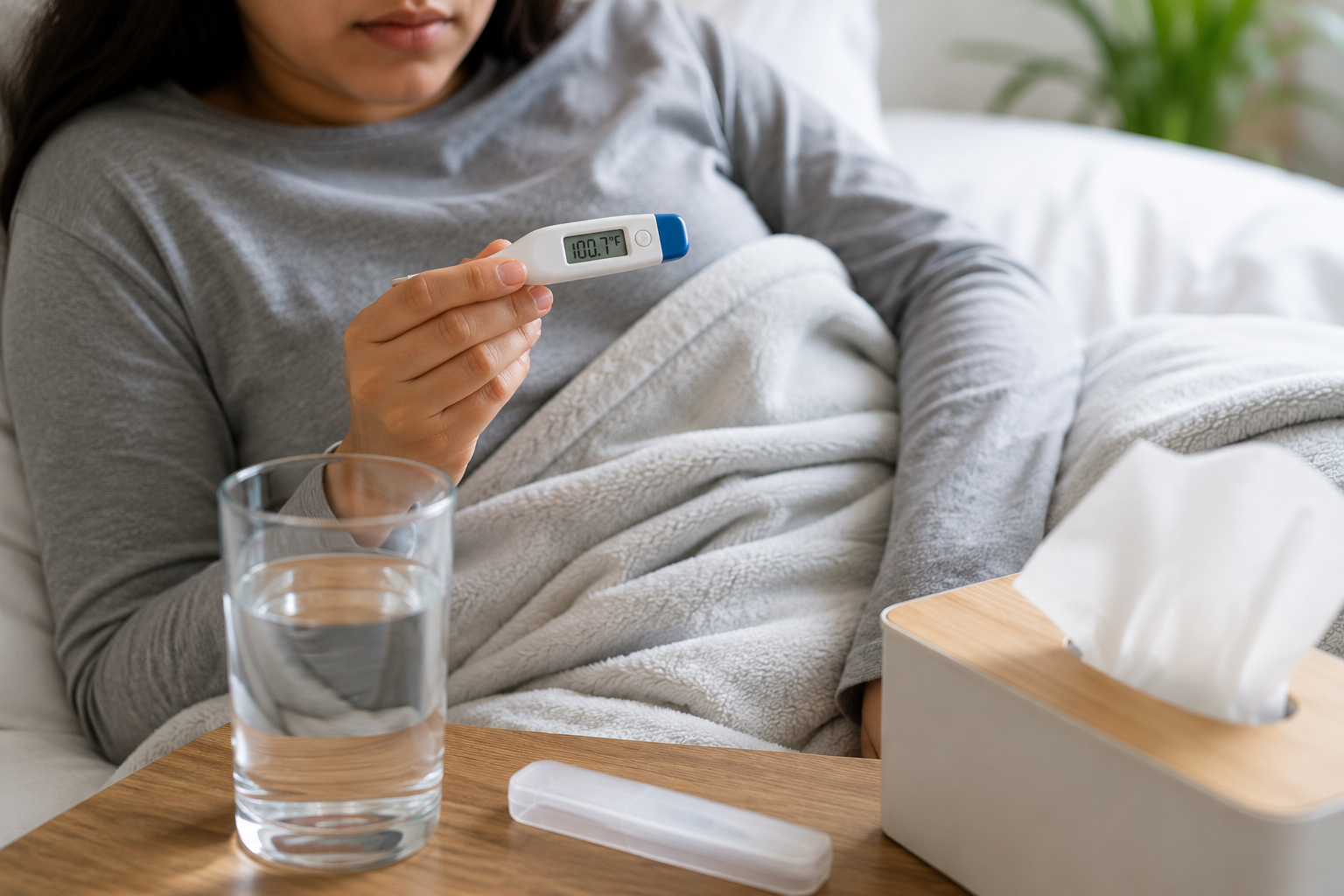
A fever on and off for 3 days looks different: temperature spikes, drops close to normal, then rises again after some hours. This cycle is common with viral infections and is less worrisome than the one that never breaks, though it still might deserve attention if the spikes climb higher each time.
Fever Above 100 That Persists for 3 Days
A fever above 100 for 3 days with consistent readings over 100°F (37.8°C) is usually mild-to-moderate, although duration matters more than the exact number. For most cases without red-flag symptoms, an online consultation is the faster first step. Seek emergency care if your fever is above 104°F (40°C), or if it is accompanied by breathing difficulty, severe confusion, or signs of a serious illness such as malaria, dengue, chikungunya, or a bacterial infection.
Persistent Fever with These Symptoms Means Do Not Wait
A continuous fever for 3 days is not automatically an emergency situation on its own. However, certain accompanying symptoms really shift the urgency, and those are worth knowing and should not be dismissed as “just the flu.”

Severe Headache and Fever Together
Severe headache and fever for 3 days together deserve immediate review, not wait-and-watch. This pairing can point to anything from a strong viral infection to conditions affecting the lining of the brain.
You should watch for:
- A headache that worsens when you lie down or bend forward.
- Neck stiffness along with the headache.
- New light sensitivity.
- Confusion or drowsiness.
Any of these signs with a fever above 102°F (39°C) means you must seek care the very same day.
Body Aches Along with Fever
Fever accompanied by symptoms such as chills, cough, rash, urinary symptoms, diarrhoea, vomiting, or joint pain can occur with viral infections, including flu and dengue. Mild aches are generally manageable at home with rest, fluids, and paracetamol. However, severe aches, bleeding gums, and bruising along with them need immediate evaluation.
Other Symptom Combinations That Shift the Urgency
Managing Fever at Home While You Monitor
A fever that persists for many days without any actual dip generally calls for a blood test sooner, since it acts differently than an on-and-off pattern. Without other red-flag symptoms, home care is usually fine for first couple of days:
- Take paracetamol at the recommended dose, correctly spaced.
- Sip water, ORS, or coconut water through the entire day.
- Rest completely, and avoid pushing through work.
- Use a lukewarm sponge bath if comfortable.
- Recheck your temperature every 4-6 hours.
You should avoid mixing fever medicines without doctor’s advice, and avoid ice packs, as they worsens shivering. Even after the temperature settles, it is quite normal to feel weak after fever as it’s part of your recovery process.
Table 1: Temperature Guide and Recommended Action
Persistent Fever for 5 Days or More- What Changes
If your fever has persisted for 5 days, then the situation has shifted from being wait-and-watch to needing proper evaluation. By day five, most viral fevers should be clearly improving. If the fever persists, your doctor may recommend blood tests like a full blood count, typhoid or dengue tests, or a urine culture.

When to Stop Waiting and Consult a Doctor
If any of the below mentioned signs apply, it’s time to consult a doctor rather than waiting:
- Temperature is above 102°F (39°C) for three full days
- Severe headaches, confusion, or stiff neck
- A rash, bruising or bleeding gums
- Repeatedly vomiting or having trouble keeping fluids down
- Noticeably reduced urination
- Breathlessness, chest pain, or a fast heartbeat
- Fever in elderly, young kids, or pregnant women
Table 2: Symptoms that Need Urgent Care
If you are still unsure which category you fit into, it is always better to check with a doctor than to keep guessing.
Conclusion
Most viral fevers ease within a couple of days. However, if your symptoms are new, worsening, or your fever persists, it is important to seek medical advice. You should track your temperature, stay hydrated, rest well, and watch for red flags like a stiff neck or breathing issues. If you have been handling a fever for 3 days and it is still not coming down, or it’s accompanied by a severe headache, you should not wait. Book a consultation rather than guessing what happens next. Early advice can save you from complications and put your mind at ease quickly.
Frequently Asked Questions
Can Viral Fever Last for 3 Days?
Yes, most viral fevers run three to five days before easing with rest and fluids.
Is Fever on and off for 3 Days More Serious Than a Constant Fever?
Not necessarily, as both patterns occur with viral illness. Whether the fever persists for 3 days steadily or on and off, it mainly becomes concerning when paired with severe symptoms like breathing trouble or confusion.
Should I Be Worried If I Have Migraine and Fever at the Same Time?
Migraine and fever together can be coincidental if you already get migraines. If the combination is new, or the headache feels different, get it checked, especially above 102°F (39°C).
What Does It Mean If a Fever Won't Come Down After 3 Days?
It usually means your body is still fighting an infection, or requires further medical evaluation to identify the underlying cause. Readings above 102°F (39°C) with no improvement are worth getting checked by a doctor.
Reviewed By:
Dr. Gowri Kulkarni
Head of Medical Operations, MediBuddy
This article is for general educational purposes and does not replace personalised medical advice. If you think you may have persistent fever, consult a qualified healthcare professional on MediBuddy.