

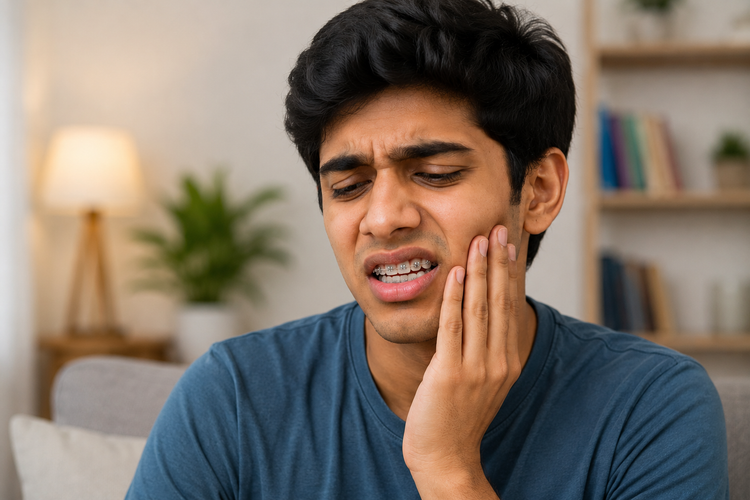
It is common to feel anxious about the pain you may have to endure when you get braces, do not worry because this is normal. Most people ask this question wanting a simple yes or no, but braces pain does not really work that way. It comes in waves tied to specific moments in treatment rather than as one long, constant discomfort. Do braces hurt? At certain points, yes, definitely. The rest of the time, most people genuinely forget they are wearing them at all.
This guide walks through exactly what to expect at each stage, from the day you get braces on to the day they finally come off, so that nothing along the way catches you off guard.
Do Braces Hurt When You First Get Them?
Well, placement day itself is painless. The orthodontist bonds each bracket to your teeth and threads the wire through, and you'll feel pressure and jaw fatigue from keeping your mouth open for close to an hour; nothing sharper than that. No anaesthesia needed, no needles involved.
Discomfort often starts on the same day of placement of braces or the following day, as the braces begin their function of moving the teeth. Discomfort usually peaks around days three to four before tapering off by the end of week one. You might feel some aches, pressure, and slight discomfort while eating; nonetheless, this feeling is temporary.
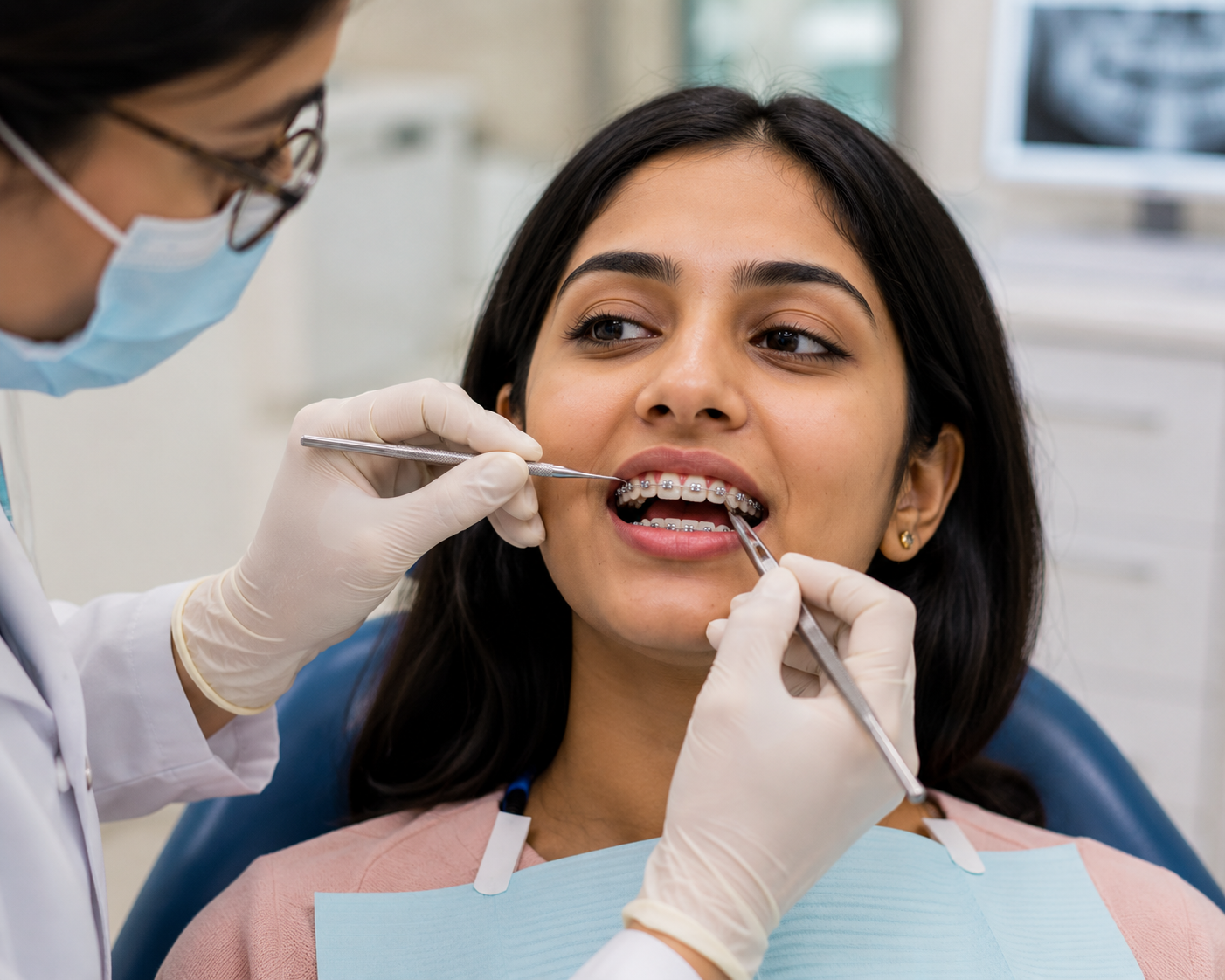
Do Spacers Hurt More Than Braces?
Here is something patients are rarely warned about in advance: spacers, in the first 24 to 48 hours, can actually hurt more than the braces themselves. These are small rubber or metal rings placed between your back molars about a week before your braces appointment, creating room for the bands that anchor part of the appliance.
Do spacers hurt more than braces? In the beginning, most likely, yes, and there is an easy explanation for this too. The pain from braces is felt throughout the entire mouth, whereas the pain from the spacers is concentrated between two particular teeth.
Eating can become difficult in this period because chewing applies pressure on the very spots where the spacers have been placed, and most individuals opt to consume smoothies and rice for a few days in order to be comfortable. On the bright side, spacers remain installed for a week only, and by the third day, most of the pain has disappeared. If wires and brackets sound like more than you want to take on, it is worth comparing your options through aligners vs braces before deciding on either path.
Do Braces Hurt When Tightened?
After you wear the braces, within the first four to six weeks, you will return to have the wires tightened by the orthodontist to move your teeth closer to their end positions. Do braces hurt when tightened? For most people, they tend to resolve within two to three days, while hard foods like apples and crusty bread seem to be the first thing that causes some discomfort after such visits.
A little bit of discomfort that falls in that window of 48-72 hours post-tightening is completely normal and anticipated. That said, you’ll find that as treatment progresses, your pain will shift; some people’s early tightenings will have been the worst ones as your teeth are still learning how to move, but later tightenings will be easier because it involves tiny, incremental changes.
In addition to that, pain, swelling, or tenderness that is more than a couple of days old isn't normal. It probably indicates a mechanical problem such as a wire that is improperly positioned or a loose bracket, which requires fixing. Under such circumstances, it is important to consult a dentist as soon as possible.

What to Do When Braces Hurt?
Different kinds of discomfort call for different responses, and knowing which is which makes this stage much easier to manage.
For tooth soreness and pressure
Certain types of food need to be consumed for the first few days following the procedure:
- Mashed potatoes
- Yogurt
- Soup
- Scrambled eggs
- Pasta
As long as one doesn't have to chew too much. Cold food provides relief for many people, and ice cream or cold smoothies are effective in relieving pain.
If the pain is so intense that sleep is disrupted, an over-the-counter painkiller can help. Following the dosage prescribed on the packaging usually suffices for a couple of nights. Alternatively, using a warm compress on your jaw could help with pain.
For cheek and lip irritation from brackets
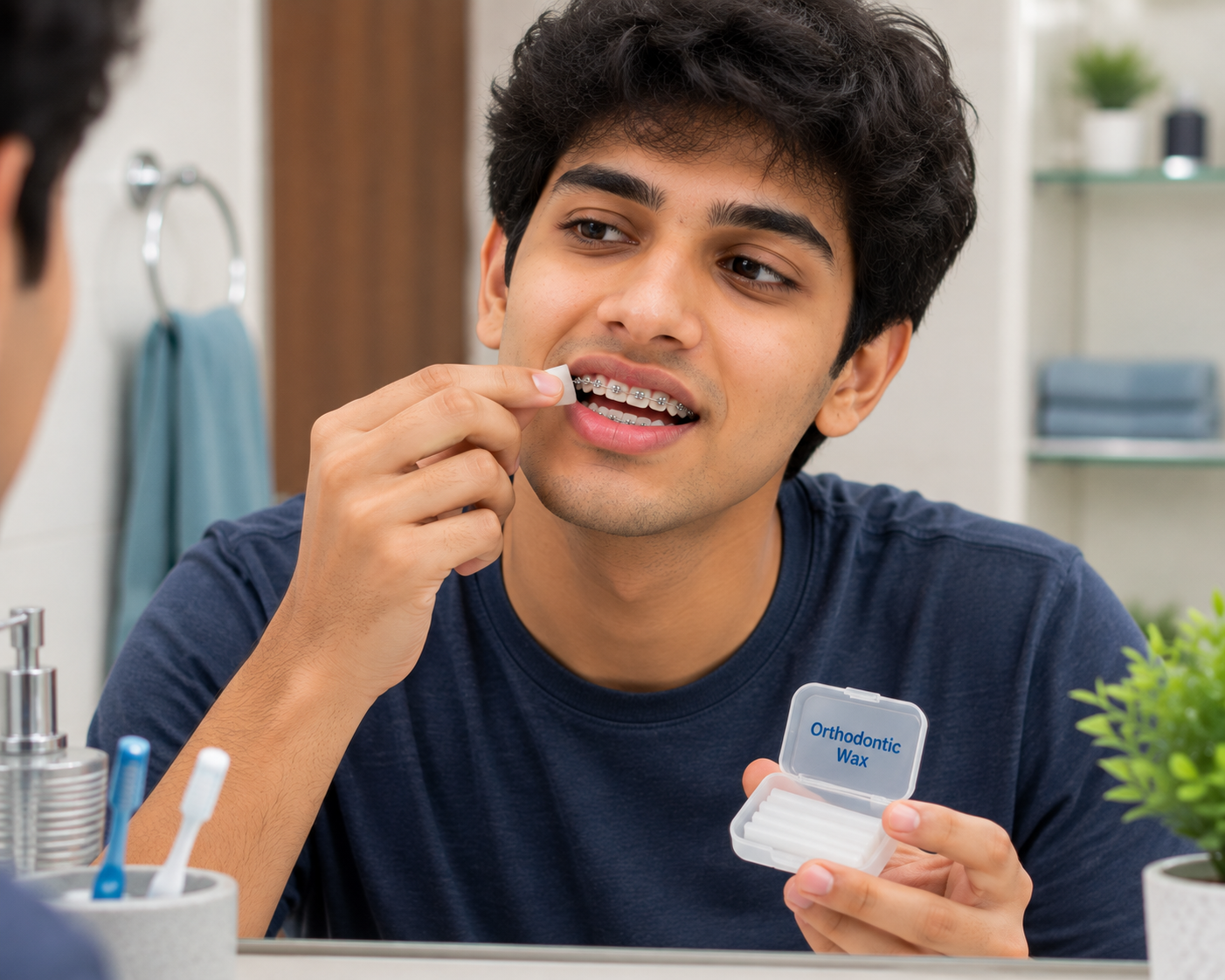
One thing that people do not prepare you for is how wearing braces can cause your mouth to hurt. New wires and brackets rub against the inside of your cheeks and lips whilst they “settle in”. It will take about two weeks for everything to toughen up and feel more comfortable. Orthodontic wax can speed up this process.
You just need to take a small piece of wax, roll it in your fingers until it softens. Then put it where you need it, where the braces cause irritation.
Always keep some wax handy, as awkward moments can happen anytime you eat, attend a meeting, or talk to someone. Without wax, you can always put a piece of clean cotton over your sore spot. It will make it hurt less until you get to get your wax. Washing your mouth with warm salt water every time you sit down for meals can speed up healing of sores.
If what's happening feels different- a snapped bracket, a wire jabbing into your cheek, that's not routine soreness anymore. That's a mechanical issue, and it needs an actual fix, not wax and painkillers.
Do Braces Hurt When You Get Them Off?
The process of removal is more like being odd than painful. The orthodontist loosens the brackets and cleans all the leftover glue from your teeth. Most people say that they feel tugging and pushing instead of any sharp pain. Do braces hurt when you get them off? For the majority of people, no, not meaningfully. Typically, the entire process takes less than an hour, with a thorough polish performed afterwards just to make sure everything is cleaned up properly.
There may be some sensitivity to hot or cold for a day or two afterwards, since teeth have been protected and might require some adjustment to the newly found open world. However, the sensation fades quickly. The more surprising thing is the feeling of lightness, which is common but more unsettling than any pain.
Moreover, orthodontists usually provide retainers at the same time, meaning that there is almost no time between taking away the braces and starting the next stage of this entire process.
Do Retainers Hurt More Than Braces?
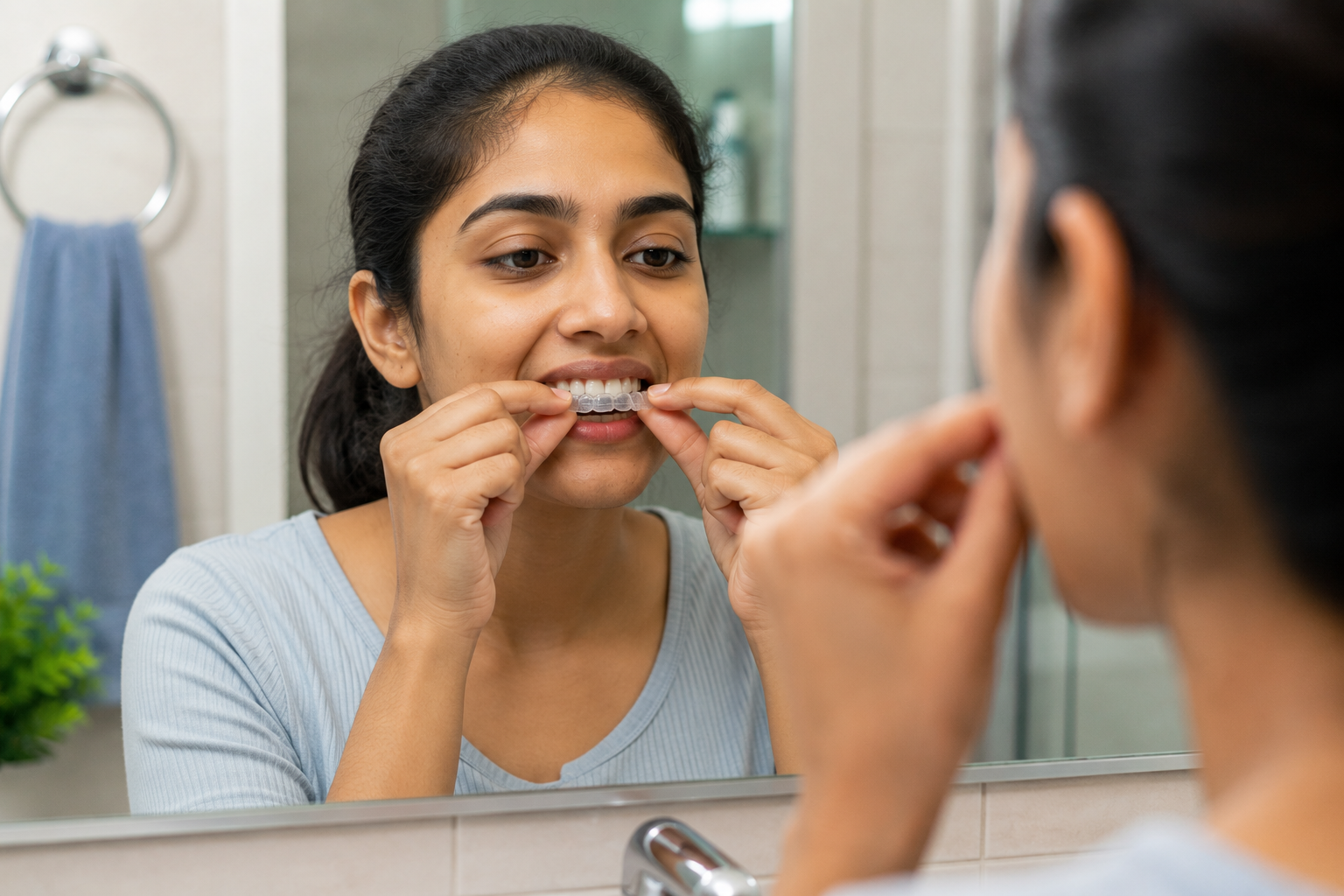
Once your braces are out, come retainers, which also come with their own mini adjustment period. Do retainers hurt more than braces? Not really, and not in the same way. What you'll feel is tightness, a snug, pressured sensation, especially noticeable if you skip a night and your teeth shift back even slightly in that gap. It's pressure, not the deeper ache that tightening appointments bring.
Whether you wear the wire and acrylic retainers or the clear ones, they basically feel the same amount of discomfort for adjustment, and although the clear ones wear a bit more uniform all around, the wire ones might feel slightly more localized to the front teeth in some areas. After about a week of wearing it nightly, you don't really feel the retainer much; in fact, it’s much more awkward not to wear one, and your mouth can get adjusted to having one.
Final Words
So, do braces hurt? Yes, but only during specific, predictable windows: right after placement, for a few days after each tightening, and briefly with spacers before treatment even begins. Outside of those windows, braces settle into the background of daily life far more quickly than most people expect going in. Everyone's pain tolerance is a little different, so your experience may run slightly gentler or a bit rougher than what is described here, and both are entirely normal. A little orthodontic wax, some soft food planning, and knowing which discomfort is expected versus which needs a call to your orthodontist will carry you through almost anything this stage brings.
One more thing worth thinking through before you begin treatment is the budget, since costs vary depending on the type of braces and your specific case. It helps to review braces cost in India early on, so you are prepared rather than surprised partway through treatment.
Frequently Asked Questions
1. How long do braces hurt after you first get them?
Roughly three to five days. Soreness builds up over the first 48 hours, peaks around day two or three, then fades steadily as your mouth adjusts to the new pressure.
2. Is it normal for teeth to hurt days after a tightening appointment?
Yes, some tenderness for two to three days is completely standard and nothing to worry about. Pain that is still sharp after five days, or comes with visible swelling, is not typical, and it is worth checking in with your orthodontist about it.
3. What helps braces pain the most?
Soft foods right after any adjustment, orthodontic wax for cheek and lip irritation, cold foods to numb soreness, and salt water rinses for any small sores that develop. Over-the-counter pain relief, used as directed, can help cover the rest.
4. Do braces hurt the whole time you wear them?
No, not at all. The uncomfortable periods are short and tied specifically to getting braces on and each tightening visit. In between those moments, most people genuinely forget they are wearing braces.
Reviewed By:
Dentist, IRIS Healthcare Clinic, Pune
This article is for general educational purposes and does not replace personalised medical advice. If you think you may have dental problems, consult a qualified healthcare professional on MediBuddy.