
Itchy Scalp and Hair Loss Together? It May Be One Problem

Table of Contents
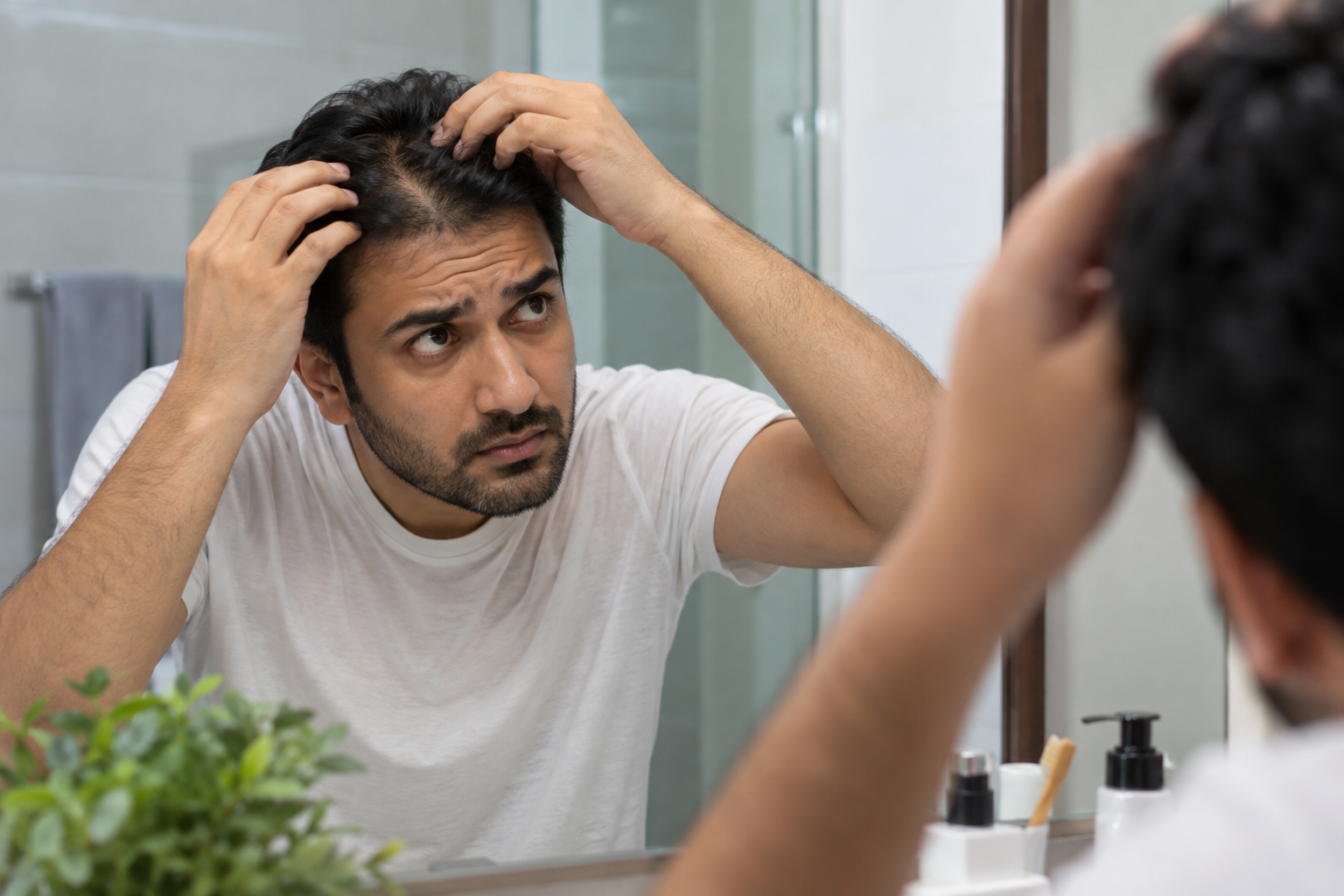
If you've been suffering from an itchy scalp for a while now, and recently you've noticed that there is quite a lot more hair than usual being washed down the drain, then you aren't making a correlation in vain. This is definitely one of the more frequent combinations that many people go through.
You would have tried changing your shampoo several times, but it can feel so exhausting and disappointing when nothing seems to work. You have also found some more hair going down the drain while taking a bath. A coincidence? Maybe not really. These two problems just like to go hand in hand.
How an Itchy Scalp Can Cause Hair Loss?
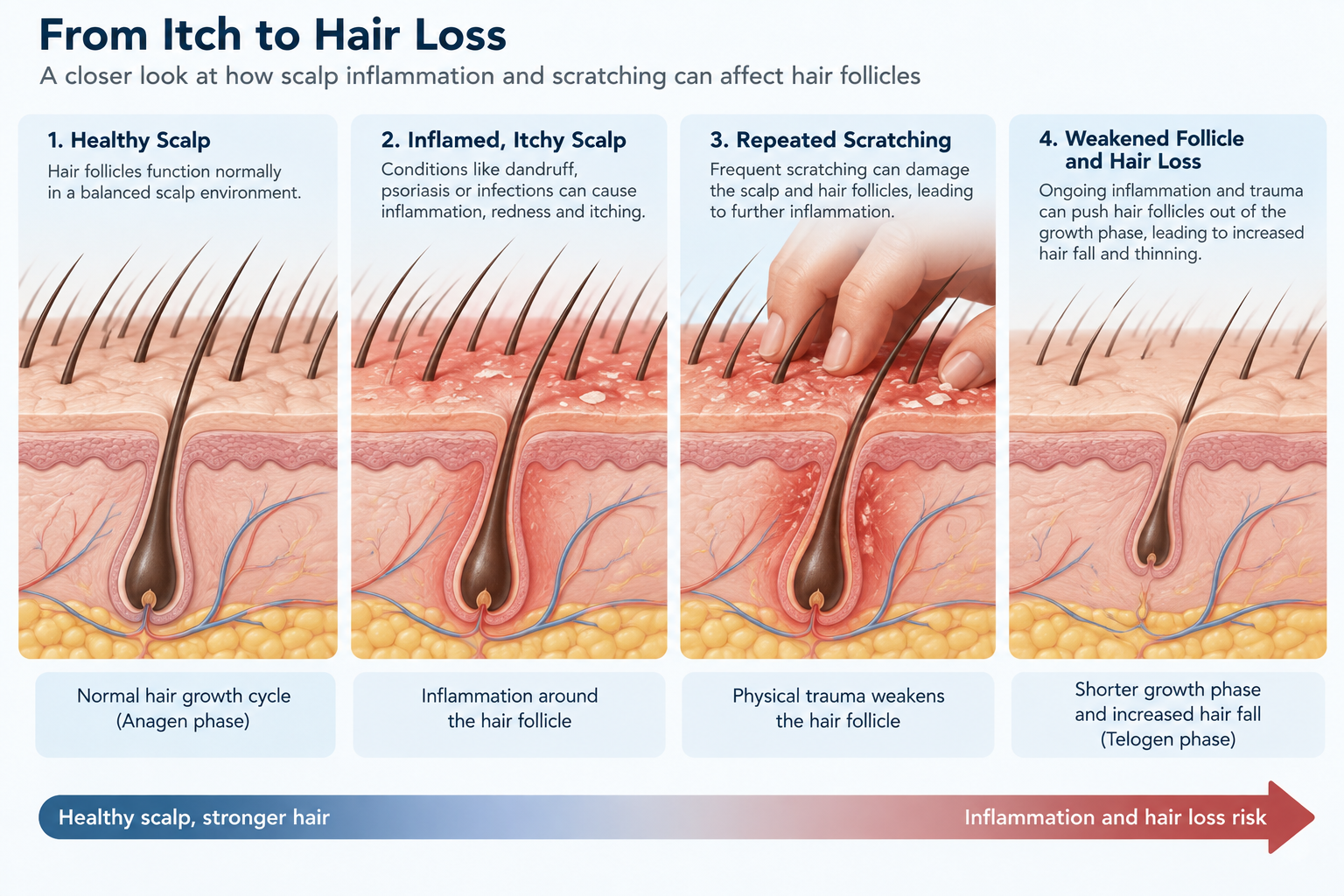
Firstly, it is a must for you to know that an itchy scalp doesn't mean you're about to lose hair. Sometimes it's just dry weather. Sometimes your water's too hard, or a new shampoo doesn't agree with you. None of that touches your hair count.
But if the scalp remains inflamed, red, flaky, irritated for weeks on end, that's now a completely different story. The follicles underneath get moved out of their growth phase earlier than they're supposed to. And then there's the scratching. Which is quite common because everyone does it due to multiple factors like humidity, dust and pollution. That adds physical stress right on top of the inflammation already happening.
If you're not sure whether what you're seeing counts as a lot of hair fall or not, then knowing how much hair fall is normal is worth checking first. It will help you establish your baseline before jumping to conclusions.
Common Causes of Itchy Scalp and Hair Loss Together
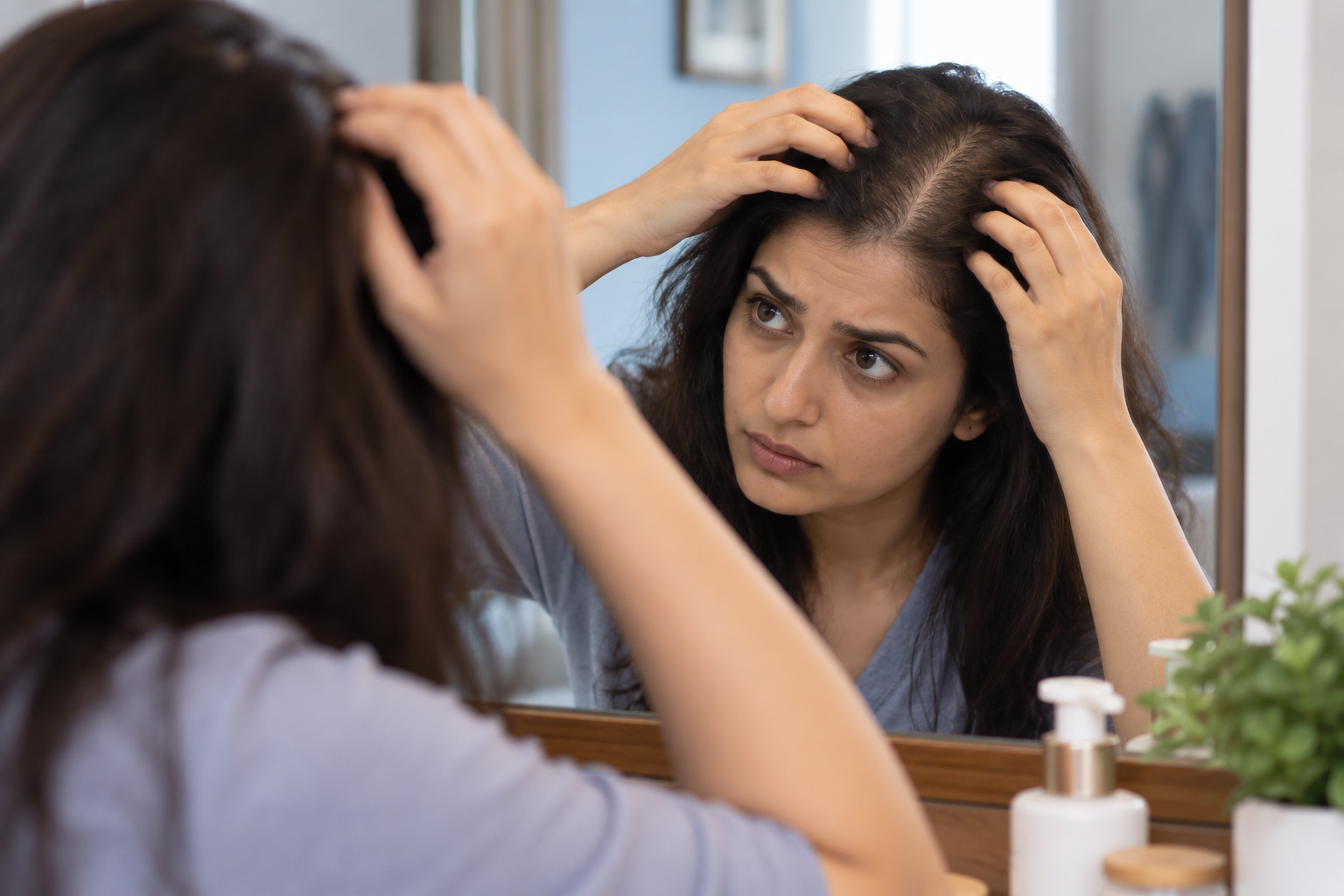
There's not one single cause here. A few conditions keep coming up again and again. A few of the common reasons are mentioned below:
Dandruff and Seborrhoeic Dermatitis
Dandruff's the mild one. Flaky skin, some itching, usually goes away with the right shampoo. Seborrhoeic dermatitis is the more severe form of it: greasy, yellow scaly patches, redness, and itchy patches which never go away despite anything you try to do about them. If left untreated, it can actually cause hair loss in the area where the condition persists.
Scalp Psoriasis
Scalp psoriasis causes thick, silvery plaques that are often itchier than common dandruff. Psoriasis is an autoimmune condition which causes it to occur in phases – flare up and then quiet down. Most cases of hair loss related to this condition have very little to do with the actual condition itself. The hair loss results from inflammation and scratching oneself in order to feel some relief.
Alopecia Areata
This one's the major cause for an itchy scalp and can also lead to hair loss. Sudden round patches of hair loss, sometimes with a tingling or burning feeling right before the patch shows up. It's the immune system going after its own hair follicles by mistake, which sounds not good because it kind of is. Home remedies won't touch this one. It needs actual medical treatment.
Scalp Folliculitis and Fungal Infections
Simply, we can say that it is an inflammation of the area around the hair follicle, mostly caused by bacteria or fungi such as ringworm infection in the scalp. The symptoms include tiny reddish lesions that may be filled with pus. It is highly likely that the affected area will also itch. When persistent, it can cause scarring of the hair follicles.
Itchy Scalp and Thinning Hair in Women
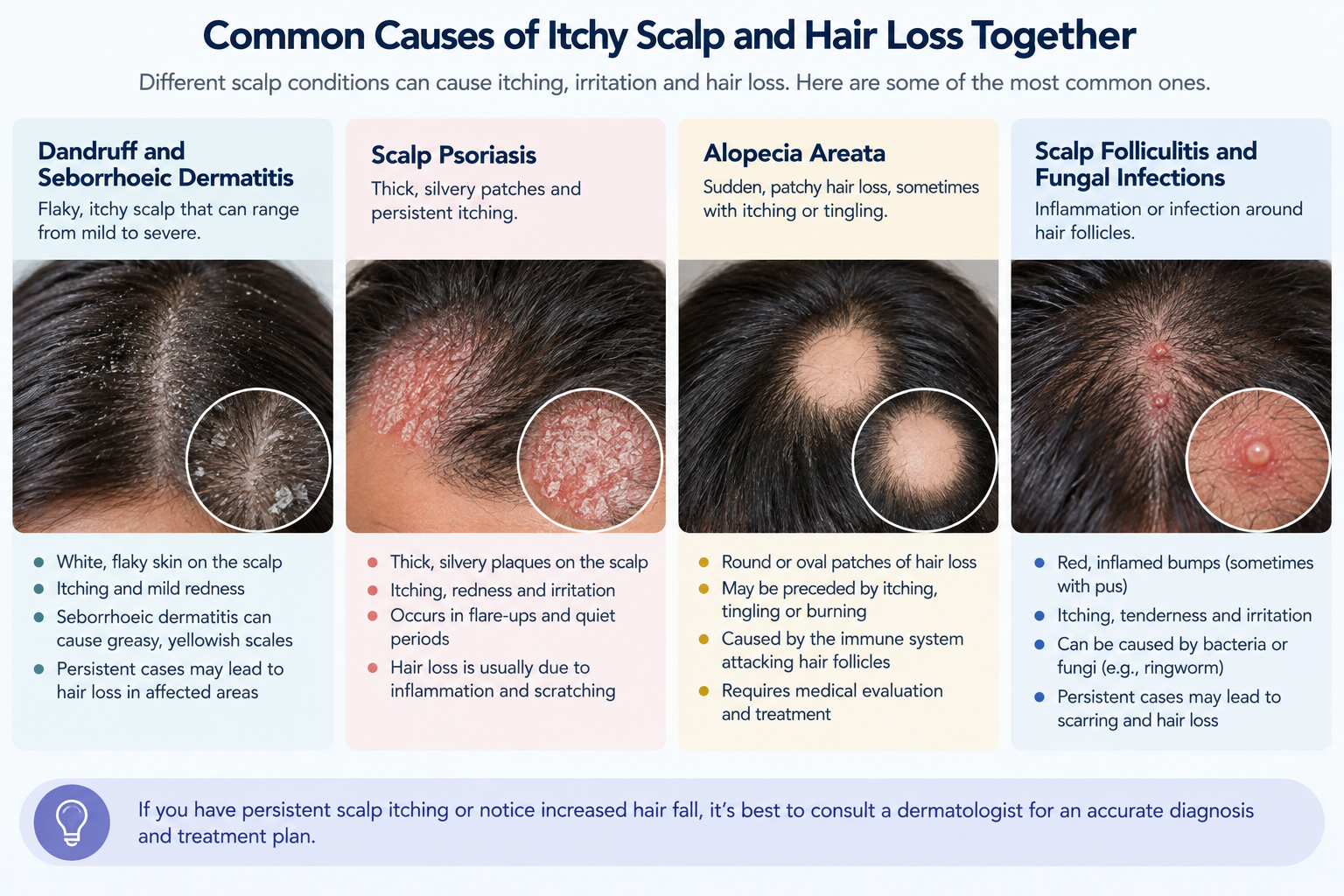
People blame stress or hormones for itchy scalp and thinning hair in women almost immediately, and look, those do play a part. But it's not the whole answer. Pregnancy, menopause and thyroid changes can all make the scalp more sensitive than usual and more prone to irritation. And that irritation just adds to whatever hair fall was already going on.
Women also tend to get thinning spread out across the whole scalp instead of one clear bald patch, so honestly the itch and the hair loss connection can be easy to miss for a while. If you've had both going on for more than a few weeks, don't treat them like separate problems. They're probably not.
Home Remedies for Itchy Scalp
Not everything you see trending is worth trying. Here's the actual split.
Remedies With Reasonable Evidence
Tea tree oil, diluted into your shampoo, actually has some real backing for cutting down dandruff-related itching, thanks to its antifungal effect. Aloe vera works well for a lot of people too, calms things down when you put it straight on the scalp. And honestly, just not washing too often, plus switching to something fragrance-free and sulphate-free, tends to do more than half the stuff people spend money on.
Apple Cider Vinegar
Apple cider vinegar for itchy scalp and hair loss is one of the most common remedies that shows up in literally every list you'll find on this topic. And to be fair, there's something to it. Diluted, it can help balance your scalp's pH and has some mild antimicrobial effect, which helps with dandruff or fungal buildup. Just don't skip the dilution step. Straight vinegar on an already irritated scalp will just burn on top of the itch you already had.
What Won't Help and May Make It Worse?
Heavy hot oil massages on a scalp that is already inflamed tend to make things worse rather than better. The same goes for harsh chemical treatments, colouring your hair mid-flare, and scratching that has become a habitual response. None of these genuinely help, and if what you are dealing with is autoimmune in nature, such as alopecia areata or psoriasis, home remedies will only ever offer surface-level relief.
They are not designed to address what is actually happening beneath the surface, and that is simply the nature of these conditions rather than any failing on your part.
How to Treat Itchy Scalp and Hair Loss Together?
The hair loss or an itchy scalp treatment starts with actually knowing the cause. It shouldn’t be a matter of blindly following what your cousin or anyone else did based on hearsay. That said, some basics apply pretty broadly regardless.
Start off with gentleness. Use mild shampoo without sulfates and be less aggressive with your styling until the situation improves. In the case where the scalp appears to have flakes or seborrhoeic dermatitis, a medicated or anti-fungal shampoo can help to make significant improvements in about two weeks. However, in the event that there is some infection, or rapid spread of the condition, or where two weeks of treatment hasn’t helped at all, that is when you should look for the professional diagnosis.
If what you actually want is to figure out how to stop hair loss and itchy scalp for good, not just calm this one flare-up, it comes down to consistent treatment aimed at the right cause. Rotating through five different remedies hoping one sticks doesn't really get you there.
When to See a Dermatologist for Itchy Scalp and Hair Loss?
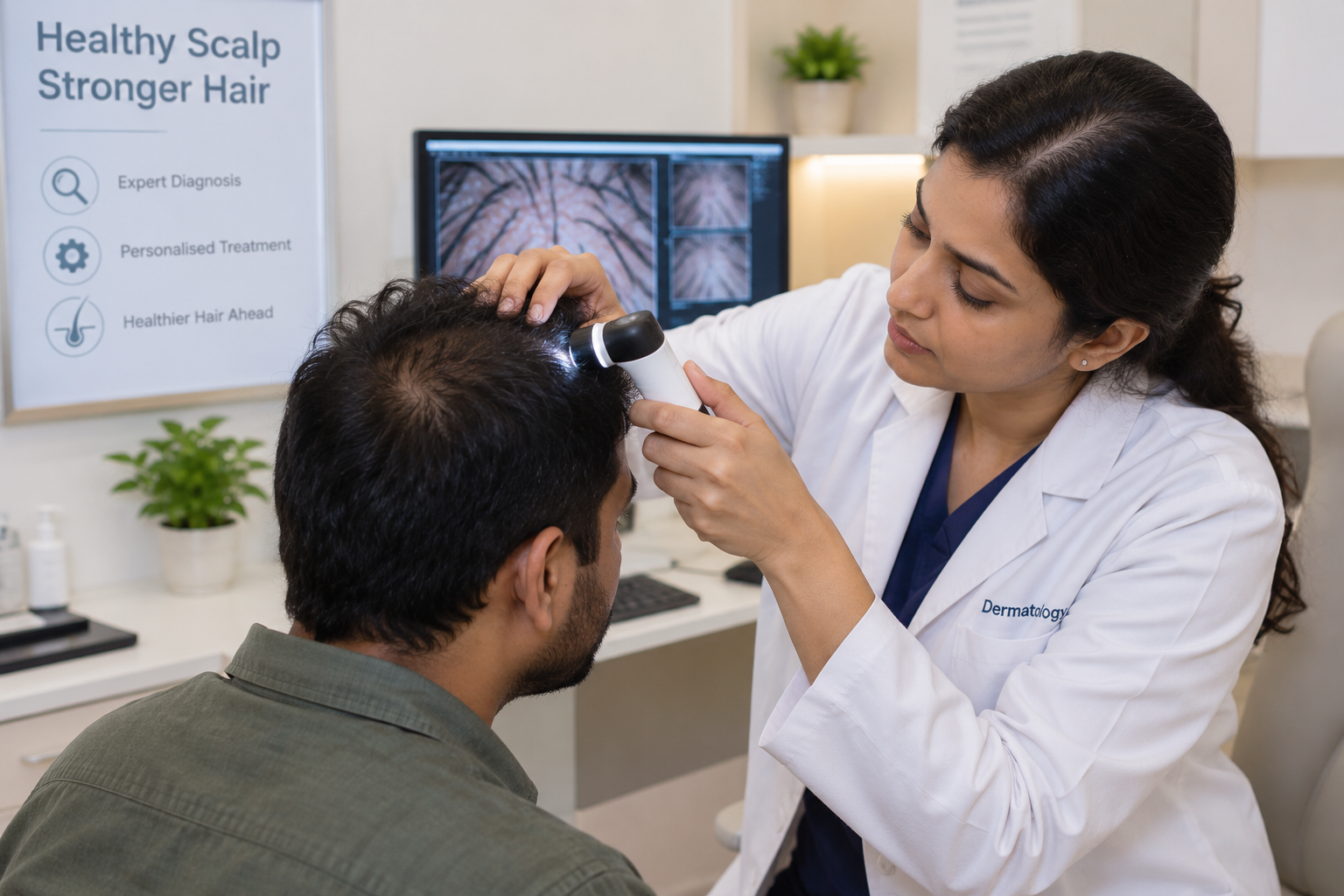
Some things shouldn't wait. Sudden hair loss and itchy scalp together, especially showing up as a round patch, needs an actual look, not another home fix. Same with severe hair loss and itchy scalp that comes with pain, oozing, crusting, or a scalp that feels hot. That combination usually means there's an infection involved.
If home care hasn't budged anything after a few weeks, or it's getting worse instead of better, that's your sign to consult a dermatologist. They'll actually be able to pinpoint what's going on, run tests if it comes to that, and get you on something built for your specific situation instead of a generic fix pulled off the internet.
Conclusion
Itchy scalp and hair loss, these symptoms aren't two problems happening to live near each other by chance. They're usually the same problem wearing two different faces. Treat only one side of it and, chances are, you'll be right back here in a month wondering why nothing's changed.
So keep it simple. You have to notice how long this has been dragging on or how bad it actually is. Just be honest with yourself about whether your daily routine is doing anything or not. If it isn't working well for you, then stop waiting for it to magically start working. Go see a dermatologist, and in the future you will be glad you didn't wait it out for another three months.
Frequently Asked Questions
1. Can dandruff directly cause hair loss?
On its own, no, plain dandruff usually isn't the culprit. However, when it develops into seborrhoeic dermatitis with full-blown inflammation, or allows scratching to develop into a regular thing, well, yes, then it definitely starts reducing hair density.
2. What does sudden hair loss with an itchy scalp usually mean?
More often than not, in such cases, it means that it is either alopecia areata or a bacterial infection, folliculitis for example. Regardless of what it actually is, it is best to consult a dermatologist.
3. Why is itchy scalp and hair thinning more common in women?
A lot of it comes down to hormones, pregnancy, thyroid issues, and menopause, all of these can leave the scalp more sensitive and quicker to react. And because women often deal with thinning spread out across the scalp rather than one obvious patch, it's easy to not even notice it's happening until it's further along.
4. Can home remedies alone stop both the itch and hair loss?
When talking about mild dandruff, then it is true that home treatment is all it takes. However, when it comes to disorders like alopecia areata and psoriasis, or infections, home treatment may ease symptoms, but it won’t provide a permanent solution.
5. How long does it take for hair to regrow after treating an itchy scalp condition?
To be quite honest, it really does depend on what caused it and how soon after that it was discovered. But in terms of a rough timeline, generally speaking, regrowth will occur sometime between three and six months.
Reviewed By:
Dermatologist, Aiwo Wellness Centre, Chennai
This article is for general educational purposes and does not replace personalised medical advice. If you think you may have hair problems, consult a qualified healthcare professional on MediBuddy.


