

How Much Hair Fall Per Day Is Actually Normal?

Table of Contents
How would you feel if upon waking up one morning, you discovered a couple of strands of hair lying on your pillow? No need to worry. Hair shedding is a normal part of the hair growth cycle, and losing a few strands each day is usually nothing to be concerned about.
But it’s natural to wonder: how much hair fall is normal, and when should you be concerned?
Why Does Your Hair Falls Out Every Day?
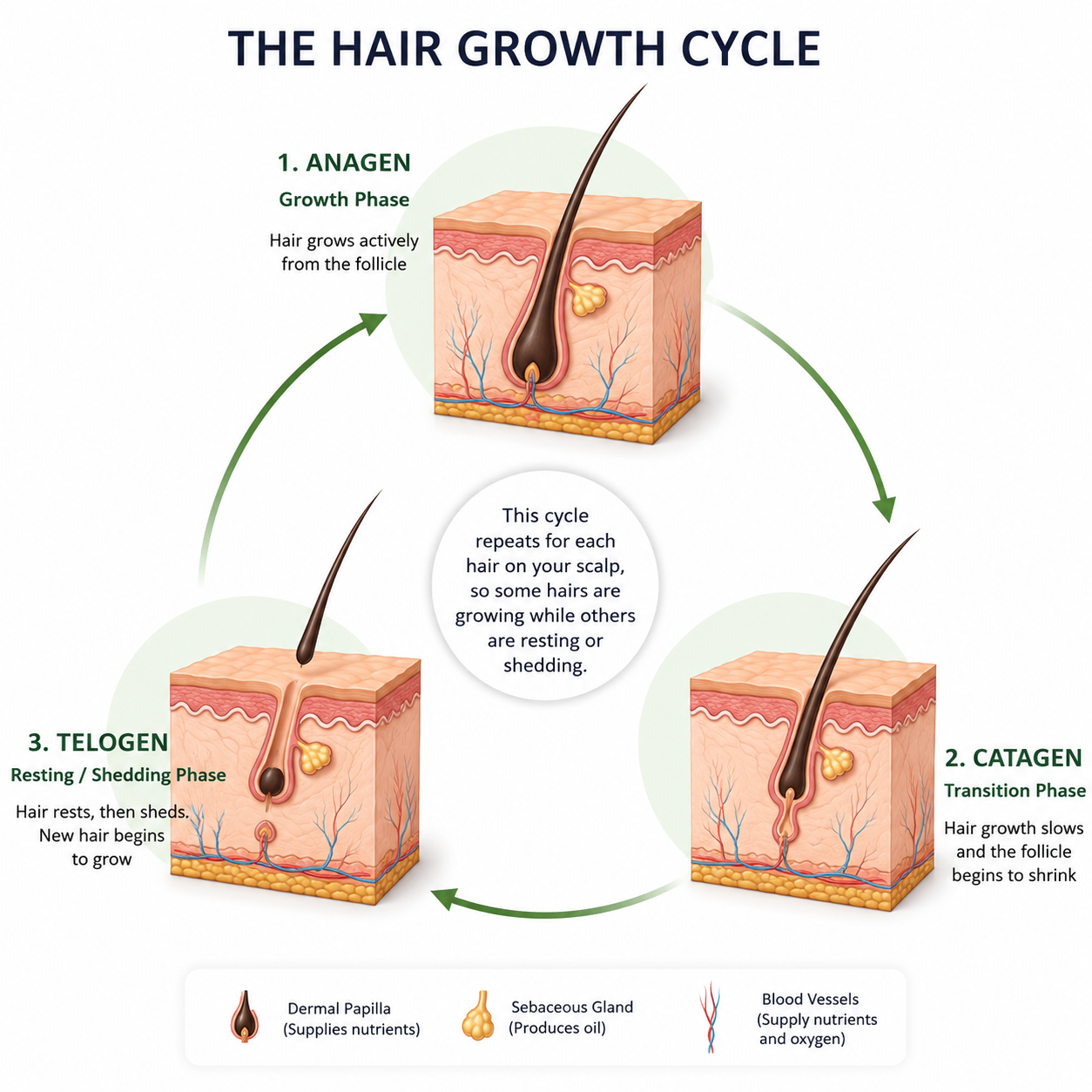
Here's the thing about hair. It doesn't grow forever. Each strand goes through a growth cycle; each strand grows for a few years, transitions briefly, then rests before it is shed to be replaced by the new one. The proper names are anagen, catagen, and telogen, but they don’t really help you understand the process.
What most people don't realise is that your scalp isn't running this cycle on a single timer for every hair at once. Some strands are growing right now. Others are resting. A few are always on their way out. That's not something going wrong. That's just how it's built. Which is exactly why normal hair fall per day isn't zero, and honestly, it never should be.
Is 100 Hair Fall Per Day Normal?
For most people, yes it is quite normal. Dermatologists usually put the normal range between 50 and 100 strands a day, so if you're around that number, shedding is normal.
You have to consider the fact that the amount varies depending on the person, and if your hair is thick and long, the amount that falls will be larger, but the percentage remains largely the same as someone who has short or thin hair, so you cannot become too obsessed with obtaining precise numbers.
Shedding vs Hair Loss: They Are Not the Same Thing
The two terms are often used interchangeably, but they are not the same.
Hair shedding is simply the hair shedding discussed above, where the hair sheds to allow new hair growth. On the other hand, hair loss involves failure of proper hair growth due to thinning of hair or widening of a bald patch on your scalp.
So, exactly how much hair loss is normal? Absolutely zero. This means that once you experience hair loss, there must be some problem interfering with the hair cycle itself; this could be genetic, hormonal or health-related.
Does Hair Fall Differ for Men and Women?
Whenever you experience hair loss, you may wonder how much hair fall is considered normal for men and women. If you have had this thought, then you are not alone. These days, it is common to have such thoughts in your mind, and we are here to help you understand what is normal.
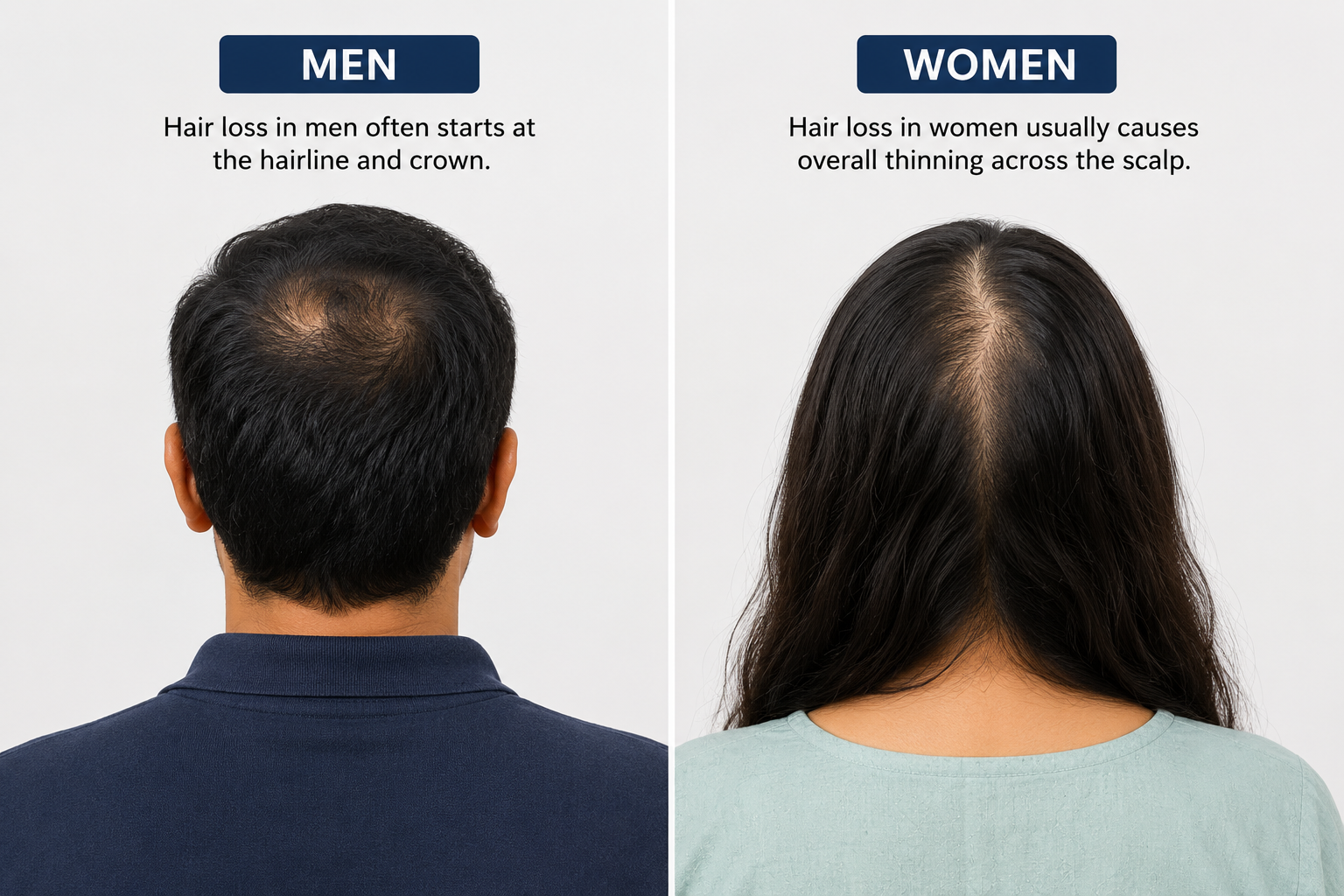
- For men, how much hair fall is normal usually ties back to genetics. Male pattern baldness tends to follow a familiar script, starting with the hairline and moving toward the crown.
- When it comes to women, things become different again. Normal hair loss in women usually causes hair to thin evenly across the scalp, rather than in just one area. Pregnancy, menopause, and thyroid fluctuations can also contribute to increased shedding or hair loss.
The daily count stays roughly similar for both. What changes is the shape of the pattern you should be watching.
What Disrupts the Normal Shedding Rate?
A handful of things can knock your shedding out of its usual zone. Some fix themselves. Some don't.
Physical and Hormonal Triggers
Your body holds stress in strange ways, and hair is often the first place it shows up. Illness, an operation, weight dropping suddenly, having a baby, and an imbalance of thyroid hormones can all cause shedding, generally about a couple of months after it’s happened. It’s called telogen effluvium. Sounds a lot more frightening than it actually is, and the problem often resolves as the rest of your system catches up.
Lifestyle and External Triggers
Sometimes it's not your body at all. Sometimes it's your routine, or just the weather outside.
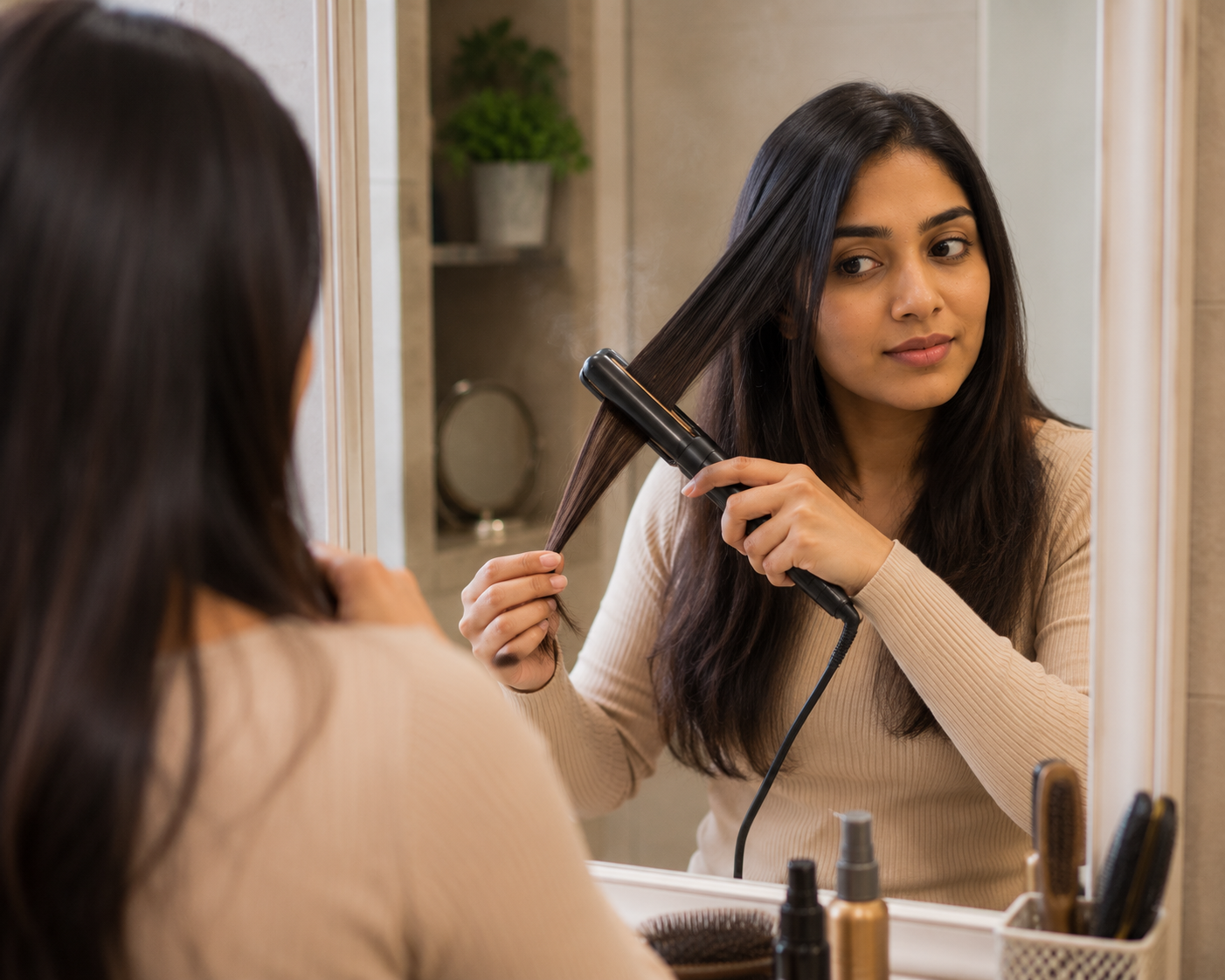
Low iron, low protein, insufficient vitamin D can all weaken strands from the inside out. Heat styling and tight hairstyles add external stress. Even the season plays a part. A lot of people ask how much hair fall is normal in monsoon, and honestly, a little more than usual is expected, since humidity messes with your scalp's moisture balance. Winter has its own version of the same problem. Normal hair fall in winter increases slightly, as dry air pulls moisture out of your scalp and loosens strands faster than usual.
If there's an itchy or irritated scalp mixed into the extra shedding, it's worth reading up on itchy scalp and hair loss, because scalp health and hair fall are far more connected than most people assume.
Honestly, most of the reasons for excessive hair fall that dermatologists hear about trace back to one or more of these triggers, stacking on top of each other. Once you stack a few, the spike stops being a mystery.
How to Assess Your Own Hair Fall at Home?
You don't need lab equipment for this. Just two simple checks you can do this weekend.
To begin the test, get some strands of hair from different parts of your scalp to make a bunch of 20 to 30 strands and pull them gently. If you lose more than six strands from your head, then it’s definitely not a positive sign.
Then try countingcount. Gather up what falls out over a full day, pillow, brush, shower drain, all of it, and compare that against the 50 to 100 range dermatologists consider normal. One thing worth knowing here: how much hair fall is normal after a hair wash tends to run higher than on non-wash days. That's not damage; that's just resting-phase hairs finally falling out all at once when you wash. Do this once a week, and you'll get a real sense of how much hair fall is normal, specifically for you, instead of just going off some generic average.

When Hair Fall Stops Being Normal?
There's a line here, and once you know what to look for, it's not that blurry.
Visible thinning at the part. Bald patches. Clumps are coming out at once. A scalp that appears to be more visible than usual. In case any of the aforementioned symptoms persist for three months or longer, particularly in conjunction with redness, scaling, or irritation, it is necessary to stop speculating. At that point, go consult a dermatologist instead of trying every remedy the internet throws at you. They can actually check your hormone and nutrient levels and tell you what's really going on, instead of you piecing it together from random forums at midnight.
Summing Up
So, how much hair fall is normal? Around 50 to 100 strands per day for most people, just the body making way for new hair to grow. No need to worry about that. The important thing here is to determine what the pattern behind the number is. Consistent, or increasing? Simply hair fall, or hair fall accompanied by hair loss?
In case you are not sure which one applies to you, there is no reason to wait months to find out if the problem will somehow get sorted out. A brief consultation with a dermatologist specialising in hair fall is all it takes.
Frequently Asked Questions
1. How much hair fall after washing is normal?
A bit more than on the days you don't wash your hair. That’s expected! When you wash, you are only detaching the strands that were in the shedding (telogen) phase, which would have naturally fallen anyway.
2. Is more hair fall normal during monsoon or winter?
Yes, a bit is normal! During monsoon, increased humidity, and during winter, excessive dryness can lead to a moisture imbalance on your scalp, loosening hair strands slightly.
3. What are the most common reasons for excessive hair fall?
Stress, hormone imbalance, malnutrition, thyroid problems, frequent heat styling or tight hairstyles, sickness, and weight loss. Mostly, there is never only one cause but several causes together.
4. Does washing hair more often cause more hair fall?
No, hair wash does not cause any additional hair fall; it only causes hair loss to become more evident at one time.
5. How do I know if my hair fall is too much?
Excessive hair loss may be defined as having observable thinning in the parting, the scalp being more noticeable than it used to be, and patches or clumps developing within a few months.
Reviewed By:
Dermatologist, Aiwo Wellness Centre, Chennai
This article is for general educational purposes and does not replace personalised medical advice. If you think you may have hair problems, consult a qualified healthcare professional on MediBuddy.


