

PCOS Is Now PMOS: What the New Name Means for Millions of Women

Table of Contents
For decades, one of the most common hormonal conditions affecting women carried a name that quietly worked against the very people it was meant to describe. In May 2026, that finally changed. Polycystic ovary syndrome, known to millions as PCOS, has been officially renamed polyendocrine metabolic ovarian syndrome (PMOS). It is a small shift in everyday shorthand, but it represents one of the most significant moments in women's health in a generation.
If you have ever been told you have PCOS, or you suspect you might, this guide explains exactly what the new name means, why experts spent more than a decade making the change, and what it should change about how you understand your own body.
What happened: PCOS officially became PMOS
On 12 May 2026, a landmark paper was published in The Lancet and presented at the European Congress of Endocrinology in Prague, announcing the new name. The change followed a rigorous, multistep global consensus process led by Professor Helena Teede of Monash University, and was endorsed by more than 50 leading academic, clinical, and patient organisations, including the Endocrine Society.
This was not a marketing exercise or a casual rebrand. The renaming process took roughly fourteen years and drew on the input of about 22,000 people, including doctors, researchers, and, crucially, patients and advocacy groups who live with the condition every day. International surveys gathered responses from more than 14,000 people with the condition alongside health professionals from every world region. Out of three final candidate names, polyendocrine metabolic ovarian syndrome won decisively.
Each word in the new name was chosen deliberately. Polyendocrine signals that the condition is driven by multiple interacting hormones, including insulin, androgens, and neuroendocrine hormones, rather than being a problem confined to the ovaries. Metabolic acknowledges the central role of insulin resistance and the elevated long-term risks of type 2 diabetes and cardiovascular disease. Ovarian retains the reproductive dimension that is still part of the picture for many women.
Notably, the word "cysts" is gone entirely. That single omission is the heart of the whole story.
Why the old name had to go
The term "polycystic ovary syndrome" was, in the words of the consensus authors, inaccurate. It implied the presence of pathological ovarian cysts, and that simply isn't what the condition is.
The "cysts" that gave PCOS its name are not cysts in any harmful sense. On an ultrasound, what clinicians see are arrested follicles: small, immature egg sacs that have not matured and released as they normally would. There is no genuine epidemic of dangerous ovarian cysts among women with this diagnosis. The name described an appearance on a scan, not the underlying disease.
That misnomer had real consequences. Because the name pointed at the ovaries, both patients and clinicians often treated the condition as a narrow reproductive or fertility problem. The wider effects on metabolism, heart health, skin, and mental health were frequently sidelined, and care became fragmented. The diagnostic toll was steep. Studies suggest that up to 70% of people with the condition remain undiagnosed. A name that misrepresents a disease doesn't just confuse; it delays the care that early intervention depends on.
It was never just about your ovaries
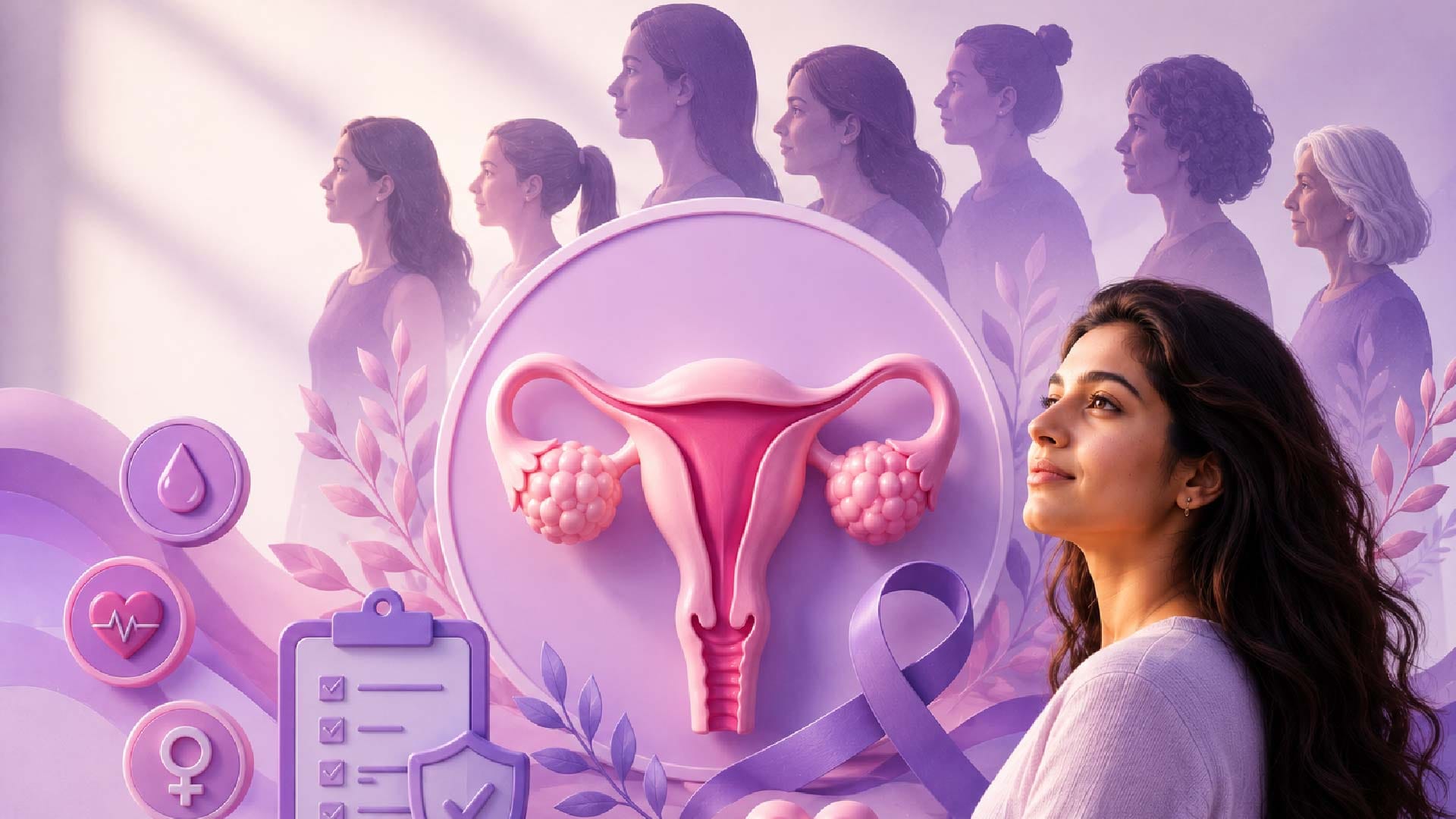
The most important takeaway from the rename is conceptual: PMOS is a whole-body, multisystem condition. Understanding it that way changes everything about how it should be monitored and managed.
PMOS is characterised by imbalances across several hormonal systems, and its effects ripple into nearly every part of health. On the reproductive side, that means irregular or absent periods, difficulty conceiving, and elevated androgens. On the metabolic side, insulin resistance is widely considered the key mechanism driving much of the hormonal dysfunction, raising the long-term risk of type 2 diabetes, high cholesterol, and fatty liver disease. The condition also shows up in the skin as acne, excess hair growth, or scalp hair thinning; in cardiovascular risk over a lifetime; and in mental health, with higher rates of anxiety, depression, and the kind of distress that too often gets dismissed.
Insulin resistance and androgen excess feed each other in a self-reinforcing loop. Higher insulin levels push the ovaries to produce more androgens and lower the protein that normally keeps those androgens in check, which in turn disrupts ovulation. This is why a condition framed for decades around the ovaries is, mechanistically, just as much about metabolism.
How common is PMOS, and why South Asian women should pay attention
PMOS affects roughly 1 in 8 women, or more than 170 million women worldwide. The World Health Organisation estimates a prevalence of about 10 to 13% among women of reproductive age.
But those global averages mask significant variation by ethnicity, and the picture for South Asian women is sobering. Research consistently points to a higher burden of the condition in South Asian and Mediterranean populations, with prevalence estimates in South Asia ranging from about 7% to 20% depending on the diagnostic criteria used. A nationwide Indian study of more than 9,800 women found a prevalence of up to 19.6%, close to double the global estimate, and India has recorded one of the steepest rises in disease burden across South Asia in recent decades.
There's a further factor that makes the condition especially important here: the so-called "Asian Indian phenotype." Women of South Asian descent tend to develop greater visceral fat, carry comparatively lower muscle mass, and show heightened insulin resistance, and these patterns appear even at lower body weights than in many other populations. In practice, that means a South Asian woman can carry significant metabolic risk while looking, by conventional measures, perfectly healthy. Standard BMI cut-offs can miss it entirely, which is why ethnicity-specific thresholds are increasingly recommended.
Know the signs
You don't need every symptom to have PMOS, and the condition presents differently from one woman to the next. But there are recurring signals worth recognising: irregular, infrequent, or absent periods, which is often the first clue; persistent acne, excess facial or body hair, or thinning scalp hair; stubborn weight changes, particularly around the midsection, that don't respond as expected; difficulty conceiving; and mood changes, including anxiety, low mood, and difficulty concentrating.
If several of these sound familiar, especially the combination of irregular periods with skin or weight changes, it is worth raising with a doctor rather than writing it off as "just how my body is."
How PMOS is diagnosed
Here is something many women don't realize: PMOS can often be diagnosed clinically, without an ultrasound. Current evidence-based criteria typically rest on a combination of irregular cycles and signs of elevated androgens, either visible symptoms like acne and excess hair, or raised androgen levels measured in the blood.
A typical workup may include a clinical history and examination, blood tests to check androgen levels and rule out look-alike conditions such as thyroid disorders, and metabolic markers like blood sugar and lipids. A blood test is a sensible and accessible first step. Anti-Müllerian hormone (AMH) testing is now accepted in guidelines as an alternative to ultrasound in adults, though it can be affected by age and body weight and isn't used to diagnose adolescents. Ultrasound is no longer always necessary for adults but may still be used in certain cases. The key message is that diagnosis is accessible. You do not need a battery of complex scans to begin.
The good news: caught early, PMOS is manageable
A diagnosis of PMOS is not a verdict. It is information, and with it comes a real ability to take control. There is no single cure, but the condition responds meaningfully to consistent management, and the earlier that starts, the better the long-term outlook.
The foundations are unglamorous but genuinely effective. Because insulin resistance sits at the center of PMOS, nutrition patterns that support stable blood sugar tend to help across the board. There is no single "PMOS diet"; the goal is a sustainable, balanced approach rather than restriction. Movement improves insulin sensitivity directly, independent of weight loss, and both cardio and resistance training help. Sleep is an underrated lever, since poor sleep worsens both insulin resistance and mood. Finally, the right medical support matters: depending on your goals, a clinician may discuss insulin-sensitizing medications, hormonal treatments, anti-androgens, or inositols, with newer metabolic therapies such as GLP-1 medications an active area of research.
The renaming itself is expected to accelerate this progress, opening doors to new research funding and more holistic models of care.
New name, same condition, far more awareness
If you were diagnosed with PCOS, you have not developed a new disease. PMOS is the same condition you have always had. What has changed is the framing, and that framing matters, because it determines whether the full scope of the condition gets the attention it deserves.
The transition won't happen overnight. You'll see "PCOS" and "PMOS" used side by side for some time as health systems, medical records, and guidelines catch up. Both terms refer to the same thing. But the direction of travel is clear and overdue. For the first time, the name leads with hormones and metabolism rather than a misleading reference to cysts. That accuracy isn't academic; it's the difference between a woman being treated for a "period problem" and being properly screened for diabetes and heart disease risk decades earlier.
If the symptoms in this guide sound familiar, don't dismiss them. A simple conversation with a doctor and a basic blood test is a powerful first step. New name, same condition, far more clarity. If this resonates with you, or with someone you love who might have it and not know, share it and start the conversation.
This article is for general educational purposes and does not replace personalised medical advice. If you think you may have PMOS, consult a qualified healthcare professional on MediBuddy
Sources: Teede HJ, et al. The Lancet, 12 May 2026; Endocrine Society (2026); World Health Organisation; peer-reviewed research on PCOS/PMOS prevalence and metabolic risk in South Asian populations.


