
Acne Scars That Won’t Fade and What Actually Helps

Table of Contents
Have you ever stared in the mirror and wondered why your acne scars won’t go away? If so, then you are not imagining it. Some marks take weeks to fade; others might even take years. The reality is, not all acne scars behave in the same way. Some are just leftover pigment, while others can be actual changes in your skin texture.
So, knowing which kind of scar you have changes everything about your treatment plan. This guide will break it down for you in simple words, so you understand what’s realistic and what actually works.
Acne Marks vs Acne Scars: Are They Actually the Same Thing
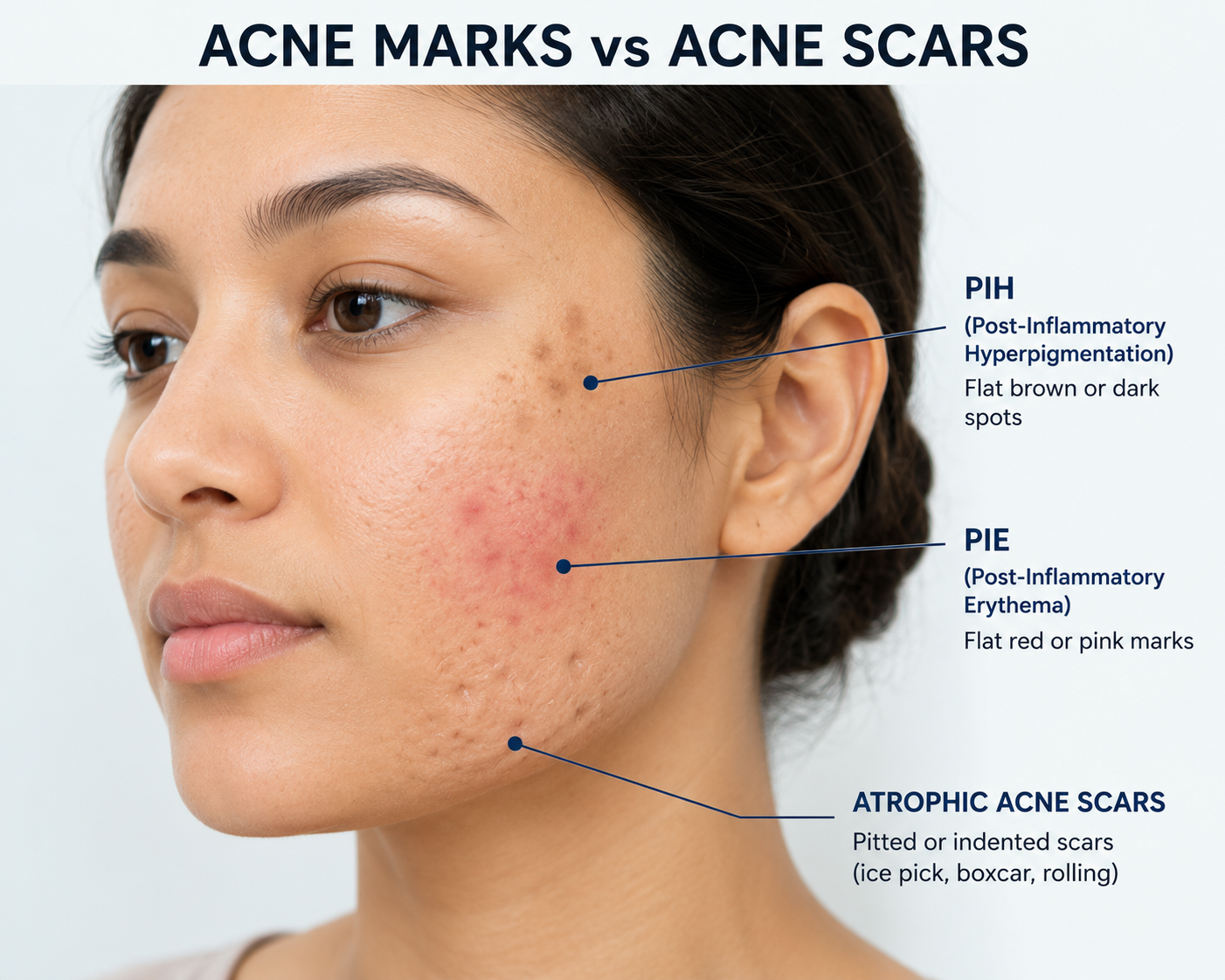
They might sound similar, but they are different. “Acne marks” generally means temporary discolouration left behind after a pimple heals. On the other hand, “acne scars” often refers to permanent change in your skin texture or structure.
- PIH (post-inflammatory hyperpigmentation): They are flat brown or dark marks, common with darker skin tones, which fade over time.
- PIE (post-inflammatory erythema): Those are flat red or pink marks caused by damaged blood vessels, and are common in people with lighter skin.
- True Scars: Lastly, they are pitted, raised, or indented areas which are caused by damaged collagen. These are the ones that don’t fade away on their own.
Types of Acne Scars and Why the Difference Matters for Treatment
When you treat the wrong kind of scar with the wrong method, it wastes your time and money. Here’s a quick breakdown of the main categories:
Deep Acne Scars
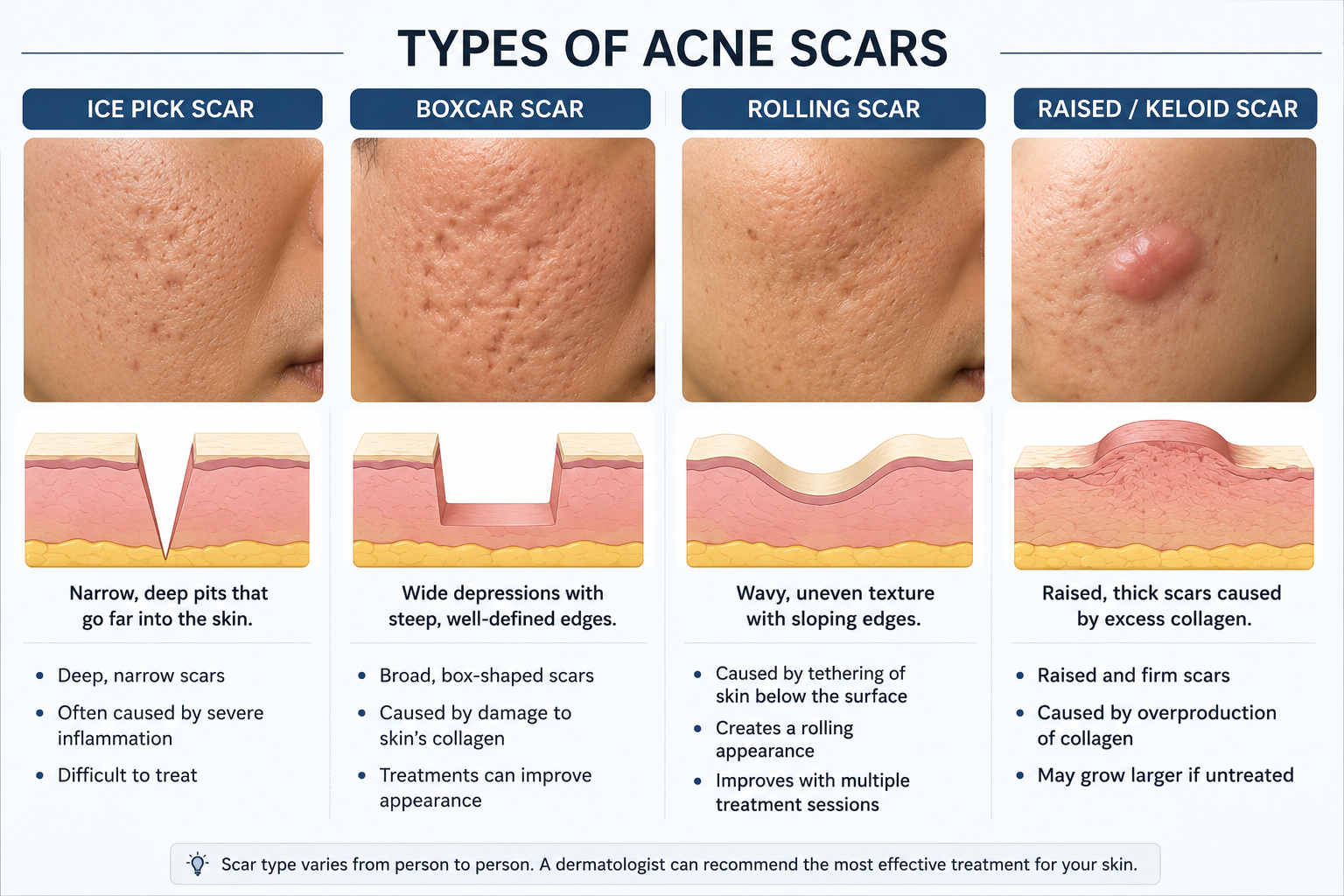
They are known as atrophic or depressed scars. They form when your acne damages collagen deep within your skin.
- They appear as pits, craters, or valleys (boxcar, ice-pick, or rolling scars)
- Does not go away with application of cream alone.
- Usually require in-clinic procedures for actual improvement.
Red Acne Scars and Pink Marks
They are PIEs and not permanent scarring. They occur when your acne inflames tiny blood vessels near the skin’s surface.
- They look flat, red, or pink rather than pitted or raised.
- They are more common in fair to medium skin tones.
- Usually fade on their own but quite slowly.
Raised Marks
These are hypertrophic or keloid scars, which are caused by an overproduction of collagen during the healing period.
- They appear raised, thick, and sometimes tender or itchy.
- They mostly occur on your jawline, chest and back.
- Can keep growing if left untreated, especially in some skin types
What Treatments Work for Each Type of Acne Scar
There is no single fix for acne scar treatment and the correct approach depends completely on what kind of scar you are dealing with.
Table 1: Treatment-by-Scar-Type Matrix
Treating Flat Dark Marks (PIH)
PIH generally responds well to consistent topical care over a few months. You should think of it as fading a stain, and not erasing an injury.
- You should use sunscreen daily, as it is non-negotiable.
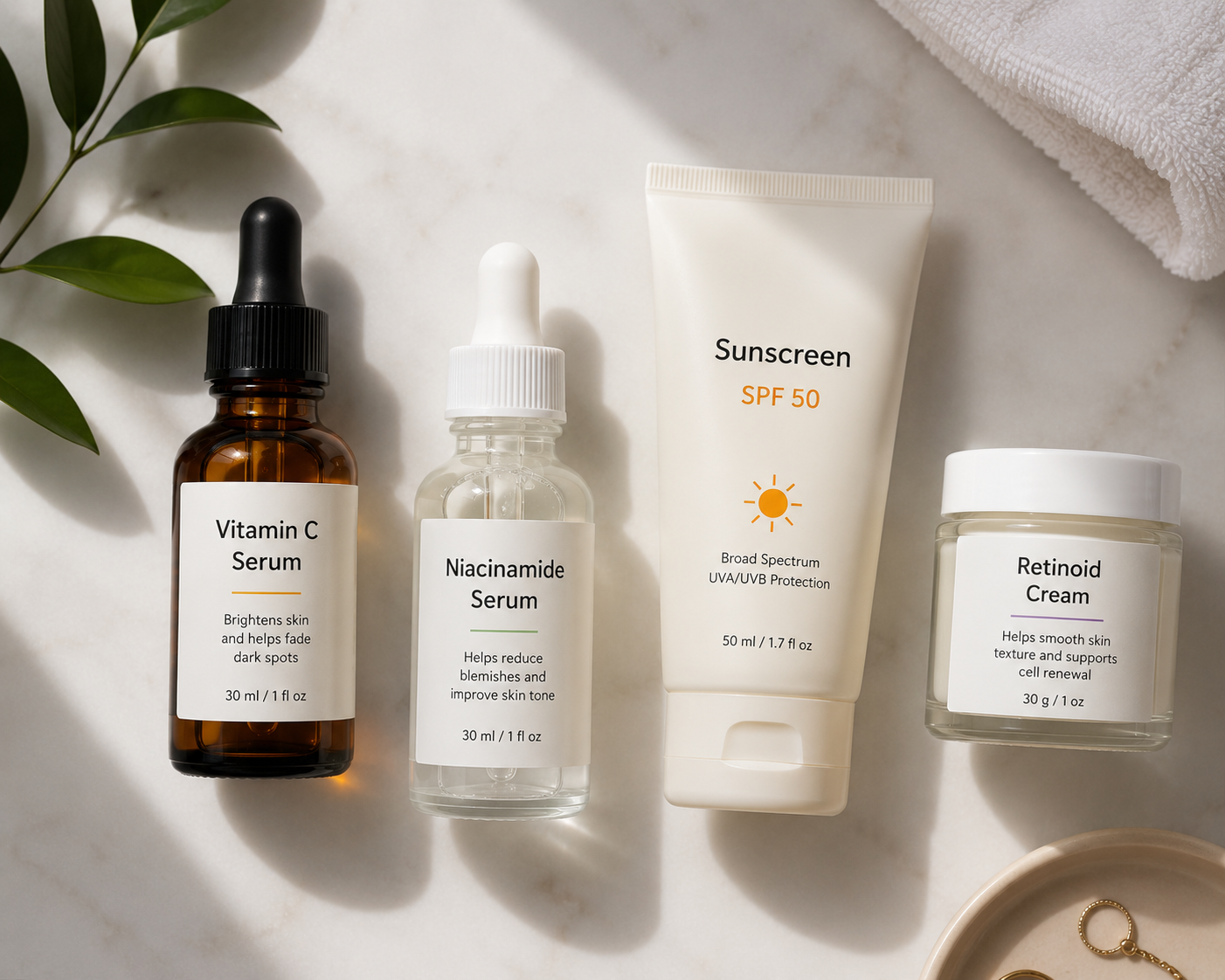
- Introduce niacinamide or vitamin C slowly in your routine.
- Be patient, as visible fading takes at-least 8-12 weeks maximum.
Treating Red and Pink Marks (PIE)
PIE is slightly trickier because very few topical ingredients target blood vessel redness effectively. So, sun protection stays vital here too.
- You must avoid harsh scrubbing, as it worsens redness.
- Vascular lasers work quicker than creams for stubborn PIE.
- Give it some time before assuming that the treatment has failed.
Treating Deep and Depressed Acne Scars
These respond best to in-clinic procedures rather than home care. Creams help to support your skin health, but it rarely fixes the structural damage.
- Subcision and microneedling are usually combined for better outcomes.
- Fillers offer temporary but noticeable improvement.
- Several sessions spread out over weeks are usually needed.
Why Indian and Darker Skin Tones Need a Different Approach
Darker skin is more prone to post-procedure pigmentation if the treatments are too aggressive. Gentle and gradual protocols usually work better in the longer run.
- Lower-strength peels and conservative laser settings are usually preferred.
- Use sunscreen before or after procedures.
- Lastly, always pick a practitioner who has experience treating darker skin types.
Home Remedies for Acne Scars
Home remedies for acne scars can support your overall skin health, but they rarely resolve deep scarring on their own. Here’s what really has evidence behind it.
Table 2: Home Remedies: Evidence & Safety
Ingredients Worth Using (Niacinamide, Vitamin C, Retinoids, AHAs)
These four ingredients are backed by consistent evidence in improving marks and mild scarring over time.
- You must begin with niacinamide (2-5%) if your skin is sensitive.
- A layer of vitamin C in the morning, and retinoids at night.
- Introduce AHAs 2-3 times a week, and not daily in the beginning.
- Lastly, always follow active ingredients with sunscreen the next morning.
Does Niacinamide Help with Acne Scars
Niacinamide is one of the gentler, evidence-backed choices for fading pigmentation-related marks. It mainly helps PIH and calms redness. However, it does not rebuild lost collagen or fill deep pits.
Can You Remove Acne Scars Naturally in a Week
As much as you want that, it is not realistically possible. Skin renewal and collagen remodelling takes weeks to months, and not mere days.
- Flat marks may lighten slightly with consistent care over 4-8 weeks.
- Deep scars will not change substantially without procedures.
- You should be sceptical of any remedy that promises outcomes in seven days.
Home Remedies That Don’t Work for Acne Scars
- Baking Soda: It disrupts your skin barrier, and increases irritation.
- Lemon Juice: Too acidic, and can burn skin and also worsen dark spots.
- Raw Garlic: It can cause chemical burns after applying.
- Toothpaste: Not made for skin, and often causes irritation.
- Excessive Scrubbing: It can damage your skin further, and can worsen PIH and PIE.
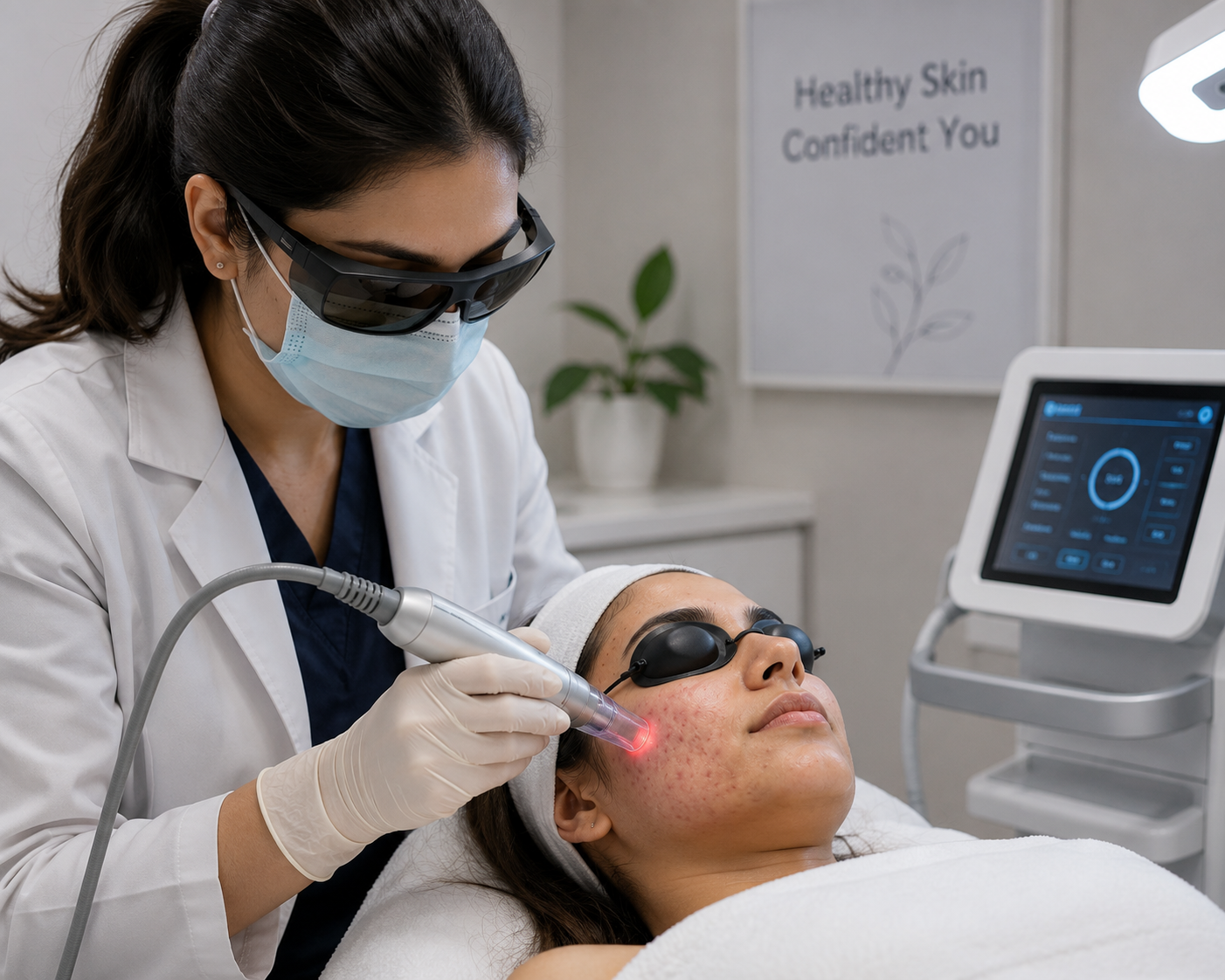
Can Acne Scars Be Removed: What Clinical Treatments Actually Do
Clinical procedures work by triggering controlled skin repair or physically correcting the texture. Nothing provides instant, permanent perfection in one sitting.
Chemical Peels
Peels use acids to exfoliate the top layers of your skin, which encourages fresher skin and fades pigment over time.
- Best for PIH and superficial texture irregularities.
- Can cause mild peeling, redness for a few days; darker skin needs gentler strengths.
Microneedling
Tiny needles create controlled micro-injuries that stimulate collagen production in the deeper skin layers.
- It is best for shallow to moderate atrophic scars.
- It causes mild redness for 1-3 days; you need multiple sessions to see visible change.
Laser Treatments
Lasers target redness, pigment, or texture depending on the kind used, resurfacing or stimulating skin renewal.
- It is best for PIE, PIH, and some textural scarring.
- The downtime varies; darker skin requires careful tool selection to avoid pigmentation.
Dermal Fillers for Depressed Acne Scars
Fillers physically lift depressed areas by adding volume beneath the scarred tissue.
- It is best for rolling or boxcar scars which need quick visible improvement.
- The results are temporary and usually last for 6-18 months depending on the type of filler.
Do Acne Scars Go Away on Their Own?
PIH and PIE can fade naturally over several months as skin cell turnover clears excessive pigment and your blood vessels normalize. On the other hand, structural scars do not disappear without help. The collagen damage underneath stays unless actively treated. Ongoing breakouts, sun exposure, and skin picking can slow down how quickly marks fade or worsen.
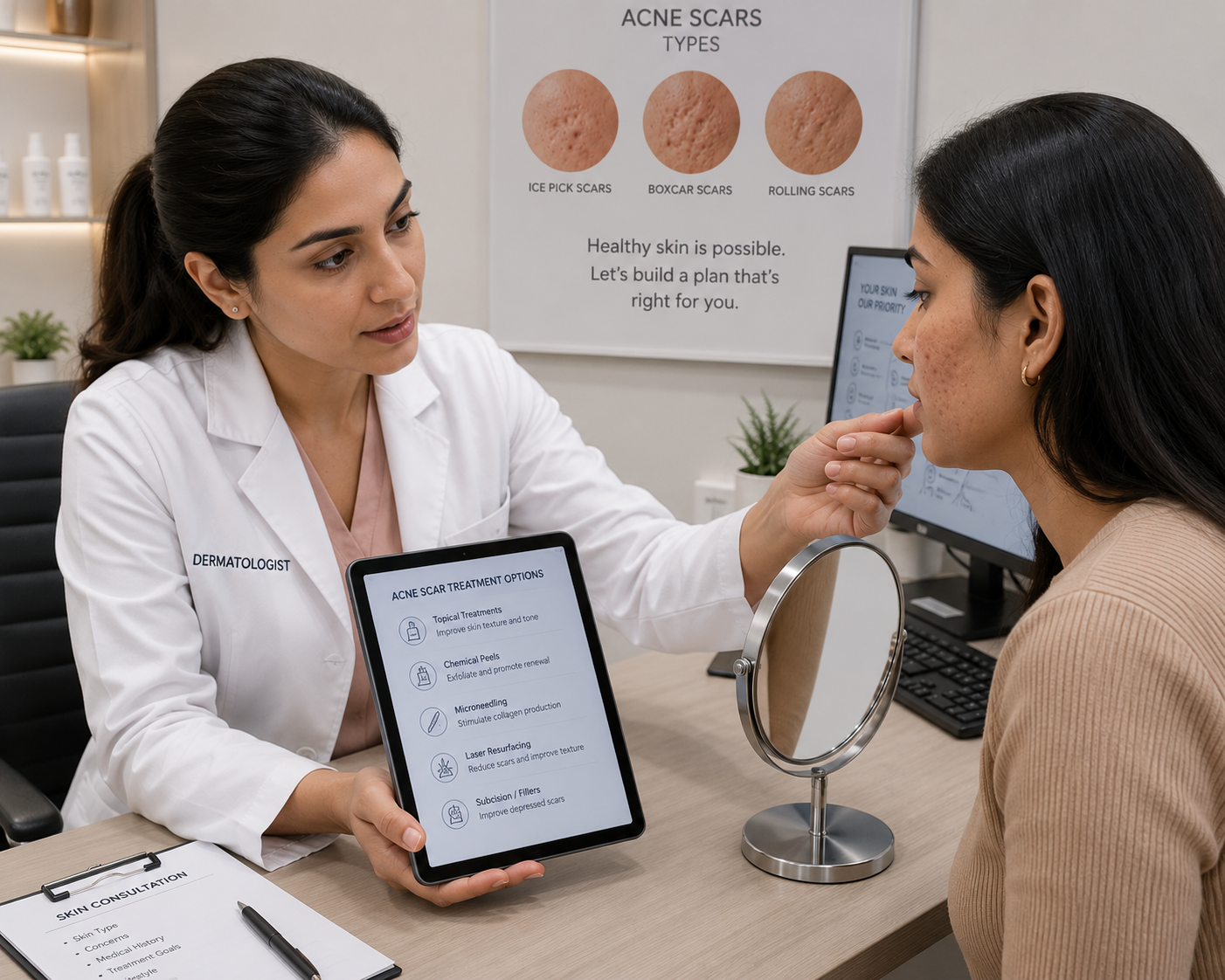
Why Your Acne Scars Are Not Improving
If your marks seem to not go away, here are a few common culprits which are usually to be blamed:
Ongoing Inflammation: New breakouts keep restarting the healing cycle.
Wrong Products: Harsh activities without sunscreen can worsen pigmentation.
Sun Exposure: UV rays darken PIH and slow the fading process largely.
Untreated Deep Scars: Creams alone cannot fix structural damage.
When to See a Dermatologist for Acne Scars
- When your marks have not improved after 3-6 months of consistent care.
- The scars are pitted, deep, or clearly affecting skin texture.
- You notice some raised, thickening, or itchy scar tissue.
- Over-the-counter products are causing irritation or worsening pigmentation.
- You want a personalised, faster treatment plan.
If any of this sounds familiar, it is best to consult a dermatologist rather than guessing further on your own.
Conclusion
Dealing with acne scars can feel discouraging, especially when nothing seems to work fast enough. However, understanding what you are actually dealing with, whether it’s pigmentation, redness or true scarring, can make a real difference in picking the correct approach.
Some marks fade with patience and the correct skincare routine. Others genuinely require in-clinic treatment to improve. Both are completely normal experiences, and neither means you are doing something wrong. If home care is not working after a few months, professional help can save you time, money, and frustration.
Frequently Asked Questions
How Long Does It Take for Acne Scars to Fade?
Flat pigmentation marks often fade in 3–6 months with consistent care. Structural scars don't fade naturally and typically require in-clinic treatment for noticeable, lasting improvement over time.
Does Sunscreen Help Acne Scars Fade Faster?
Yes, sunscreen prevents UV rays from darkening pigmentation marks further. Daily use protects healing skin, supports fading of PIH, and improves the results of other acne scar treatments.
Can Acne Scars Come Back After Treatment?
Existing scars typically don't return once treated, but new acne breakouts can create fresh scarring. Preventing future breakouts is key to maintaining results from any scar treatment.
Do Acne Scars Affect Darker Skin Tones Differently?
Yes, darker skin is more prone to post-inflammatory hyperpigmentation and can react more strongly to aggressive treatments. Gentler, gradual approaches usually work better and reduce further pigmentation risk.
When Do Acne Scars Become Permanent?
Once collagen damage causes pitting, indentation, or raised texture, scars become structurally permanent. Pigmentation-only marks (PIH/PIE) aren't permanent and typically fade gradually without leaving lasting texture changes.
Does Salicylic Acid Remove Acne Scars?
Salicylic acid helps prevent new breakouts and mildly exfoliates skin, which can support pigmentation fading. It doesn't rebuild collagen or meaningfully improve deep, textural acne scars on its own.
Reviewed By:
Dermatologist, Aiwo Wellness Centre, Chennai
This article is for general educational purposes and does not replace personalised medical advice. If you think you may have skin problems, consult a qualified healthcare professional on MediBuddy.


